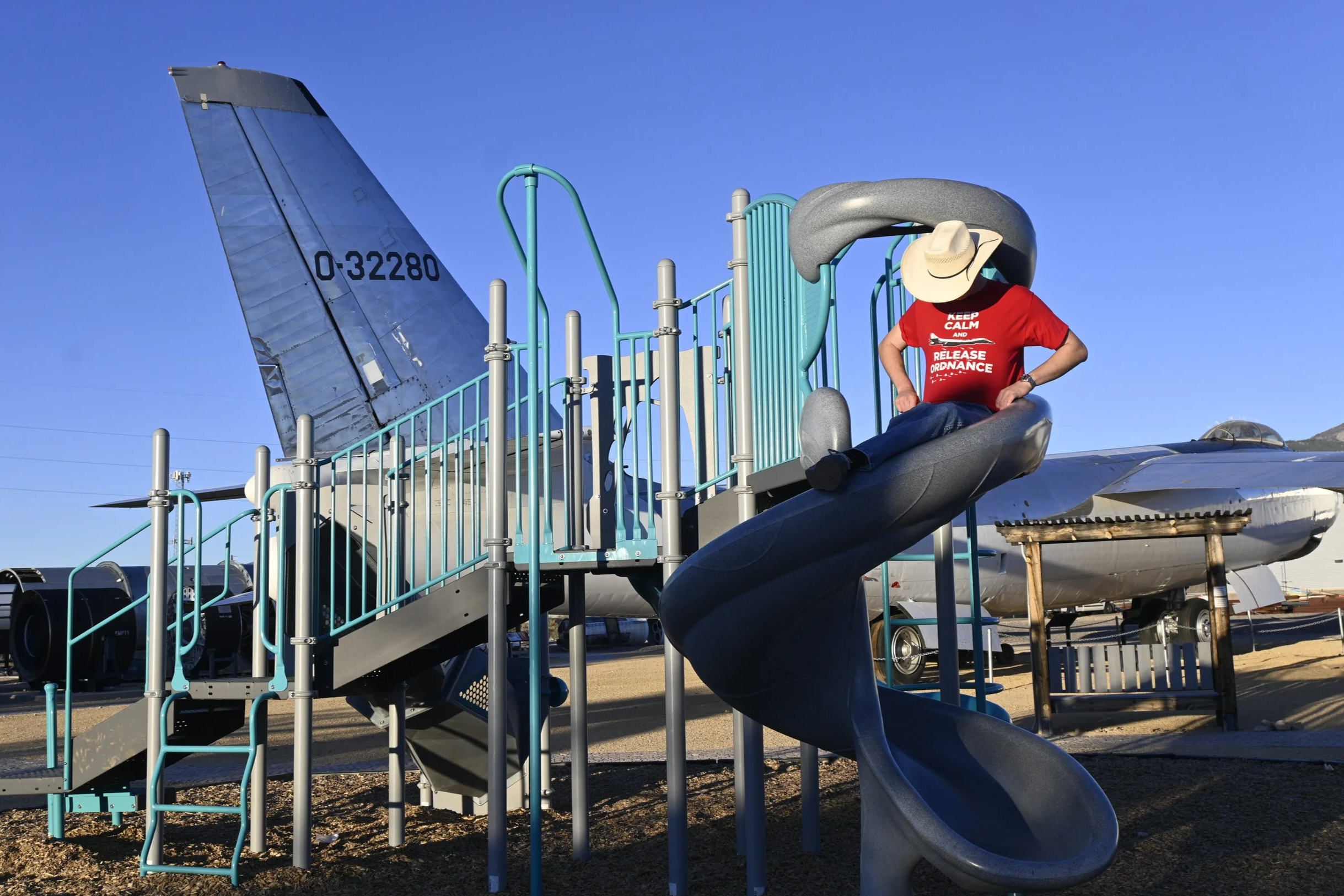
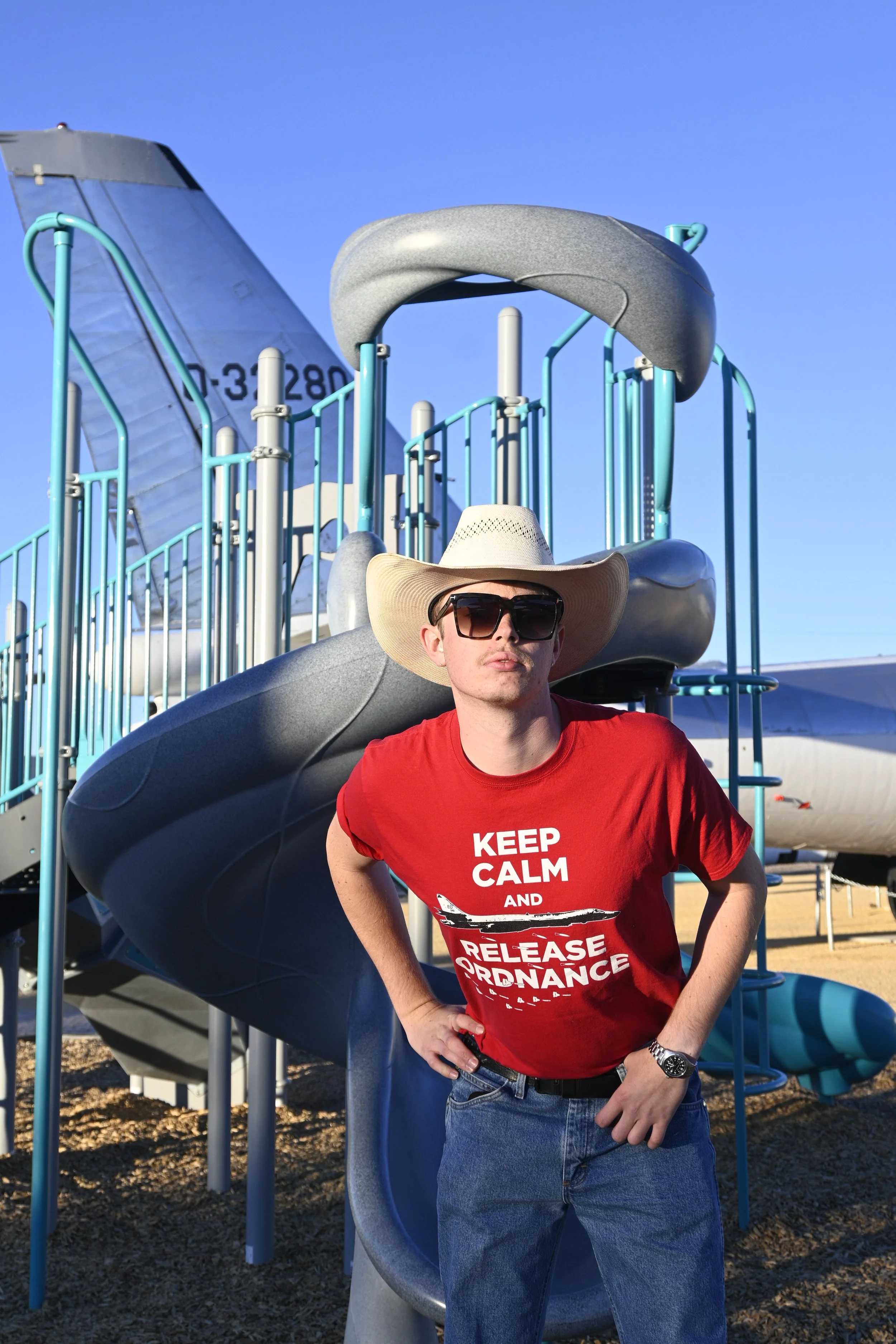
These photographs were taken at the National Museum of Nuclear Science & History in Albuquerque, New Mexico, amongst its collection of nuclear weapons, aircraft and military hardware. I am wearing a T-shirt which reads KEEP CALM AND RELEASE ORDINANCE.
What struck me most about the museum was the playground. Sitting amongst replicas of nuclear bombs, rockets and military aircraft is a children's play area. The photographs came from the absurdity of this situation: a space designed for children to play, placed within a museum dedicated to weapons capable of destroying cities.
I found myself thinking about what kind of emotional weight a place like this should carry. A museum dedicated to nuclear weapons, particularly weapons used in Hiroshima and Nagasaki, might reasonably be expected to encourage some degree of reflection. Instead, much of the museum presents American nuclear history through technological achievement, military development and national pride. The human consequences are there, but they feel remarkably small in comparison.
There is a small section the size of a downstairs loo dedicated to Hiroshima and Nagasaki, despite the enormous scale of the museum. The bombs are presented as historical objects and technological achievements, while the people who experienced their power are so distant. This seems particularly uncomfortable when the museum's forecourt is simultaneously filled with the machinery of nuclear warfare and a fucking playground.
The gift shop pushes this contradiction further. During my visit, replicas of Little Boy and Fat Man were available as sterling silver earrings. These were the bombs dropped on Hiroshima and Nagasaki in August 1945, killing tens of thousands of people immediately and causing further deaths and suffering through burns, injuries and radiation. The earrings turn the weapons into novelty objects, something to wear, collect and take home.
The museum has previously faced criticism for selling atomic-bomb replicas as merchandise, including protests in Japan. The fact that such objects can move so easily from instruments of mass killing to souvenirs seems to reveal something about the way nuclear history is remembered in the state.
The photographs aren't intended to make light of the people who died. If anything, the opposite. The deliberately stupid slogan and the ridiculous setting are a way of pointing towards the absurdity of how comfortably these objects can exist within everyday culture. Keep calm suggests composure, normality and British wartime optimism; release ordinance replaces the threat of the original phrase with the language of military bureaucracy.
The result is a photograph that is difficult to place. It is funny, but the joke doesn't really have anywhere to go.
Perhaps that is the uncomfortable part.