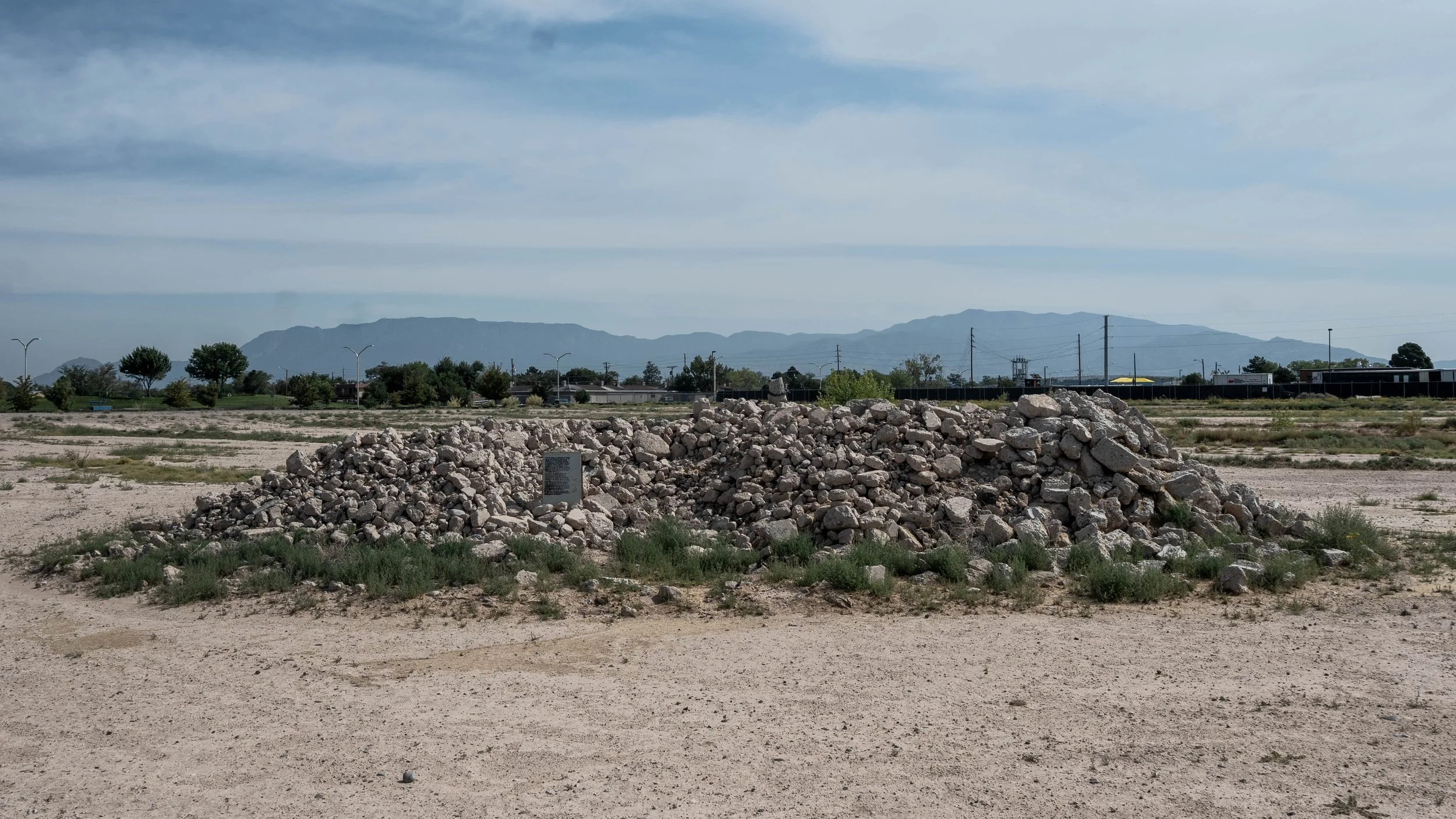
Sandia Mountains 2
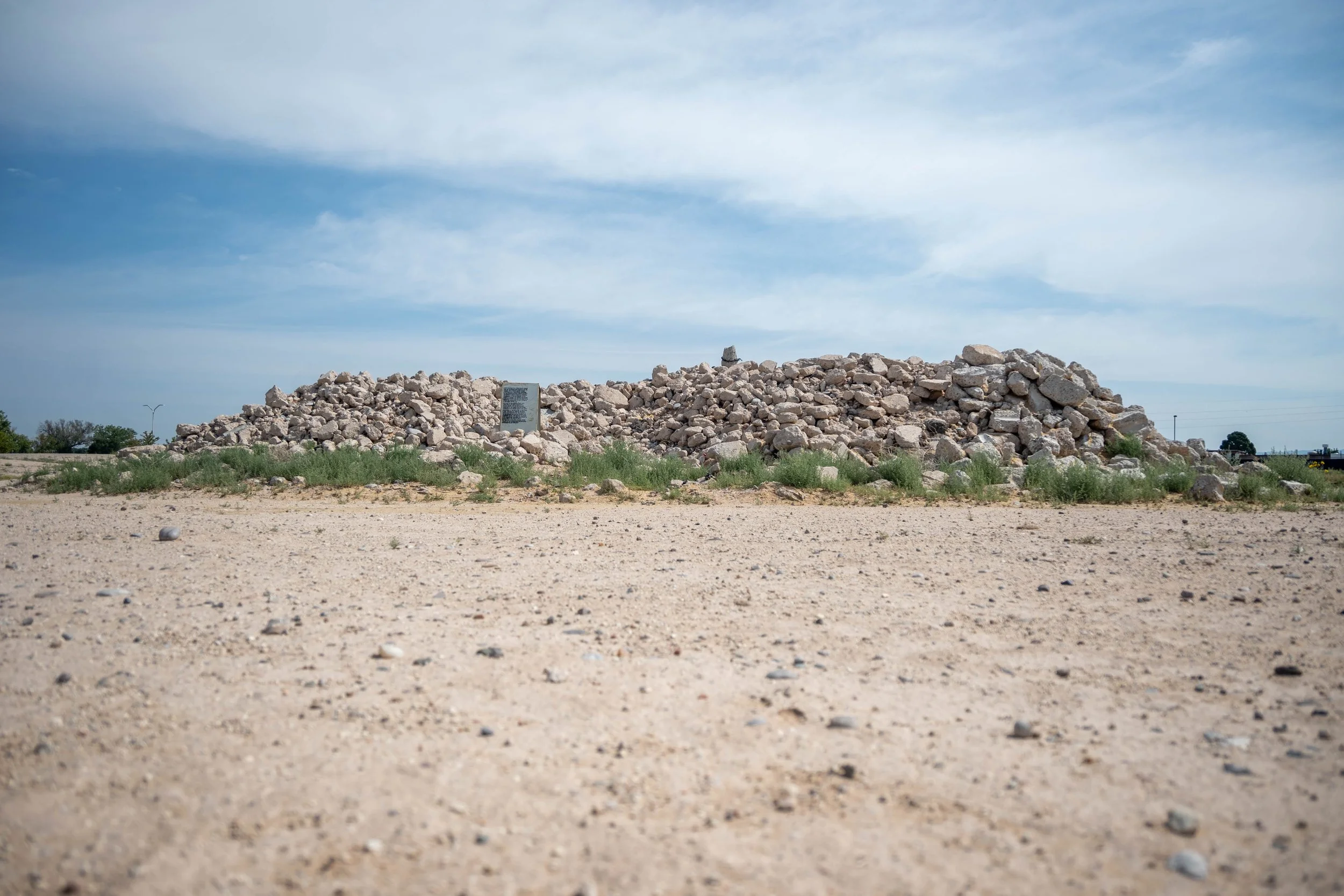
Sandia Mountains 2 was a temporary tourist attraction installed in an abandoned lot beside the former 17/35 runway at Albuquerque International Sunport. The work consisted of a mound of urbanite. which, from a certain angle, closely resembled the Sandia Mountains looming behind Albuquerque. I installed a plaque dedicating the mound as a post-apocalyptic version of the mountain range.
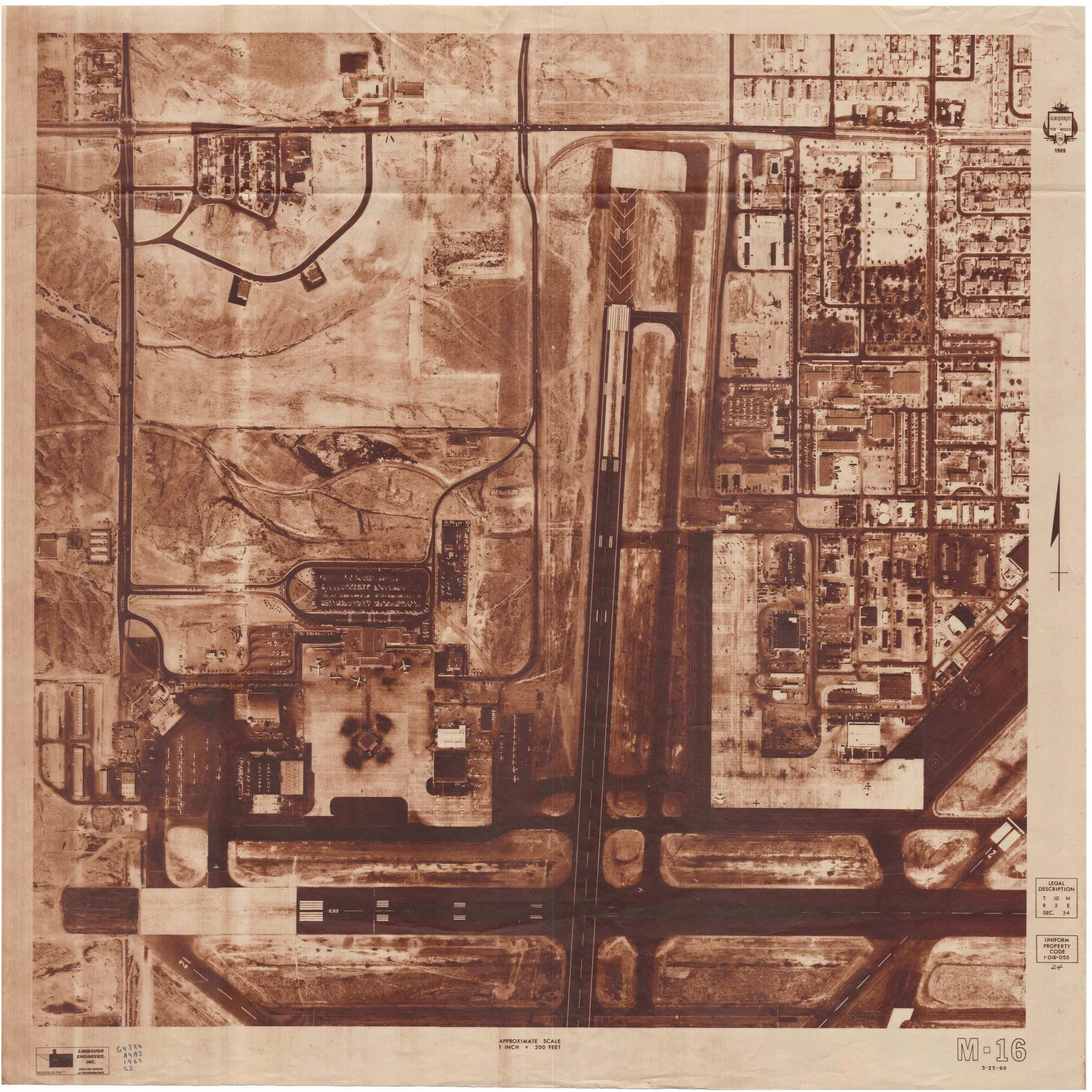
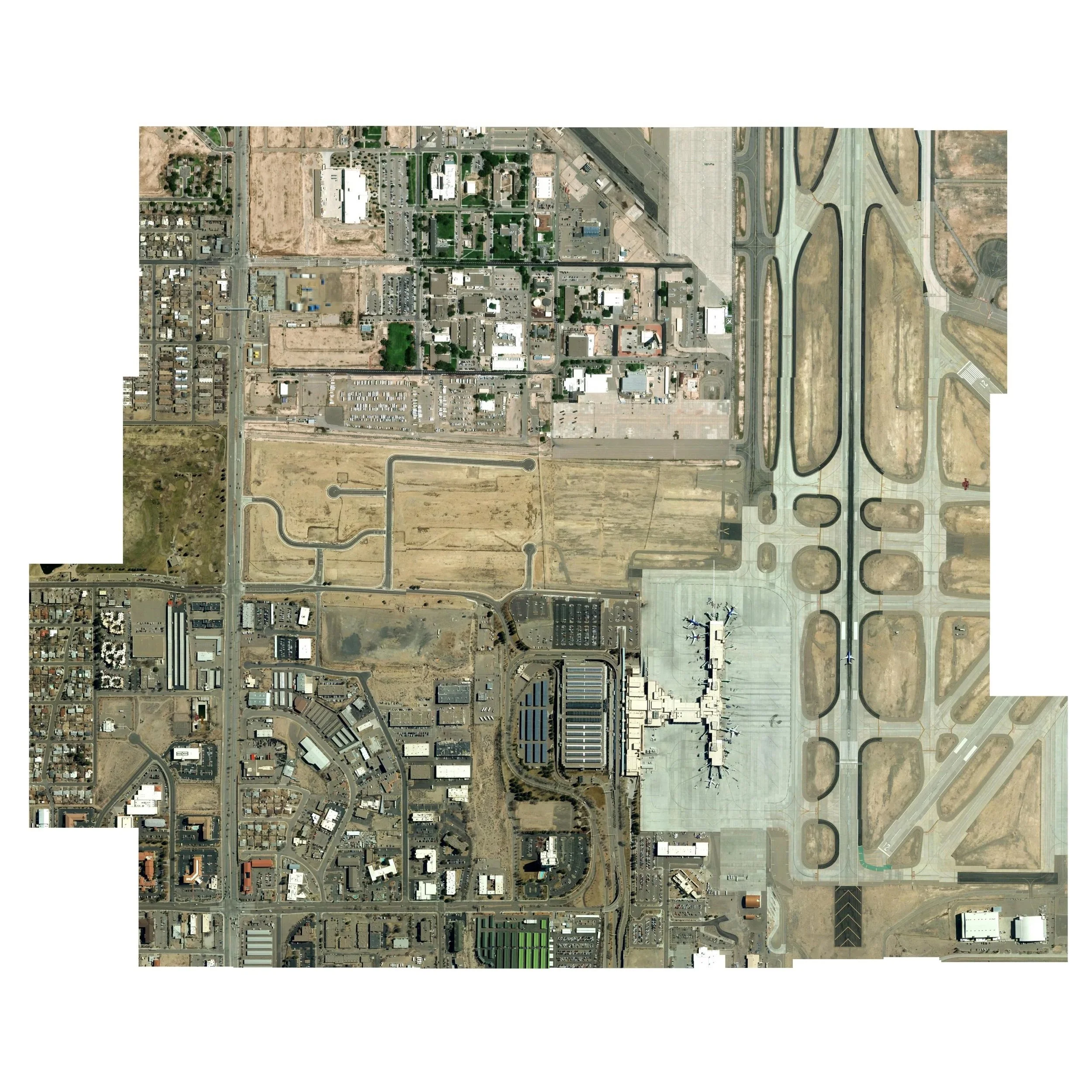
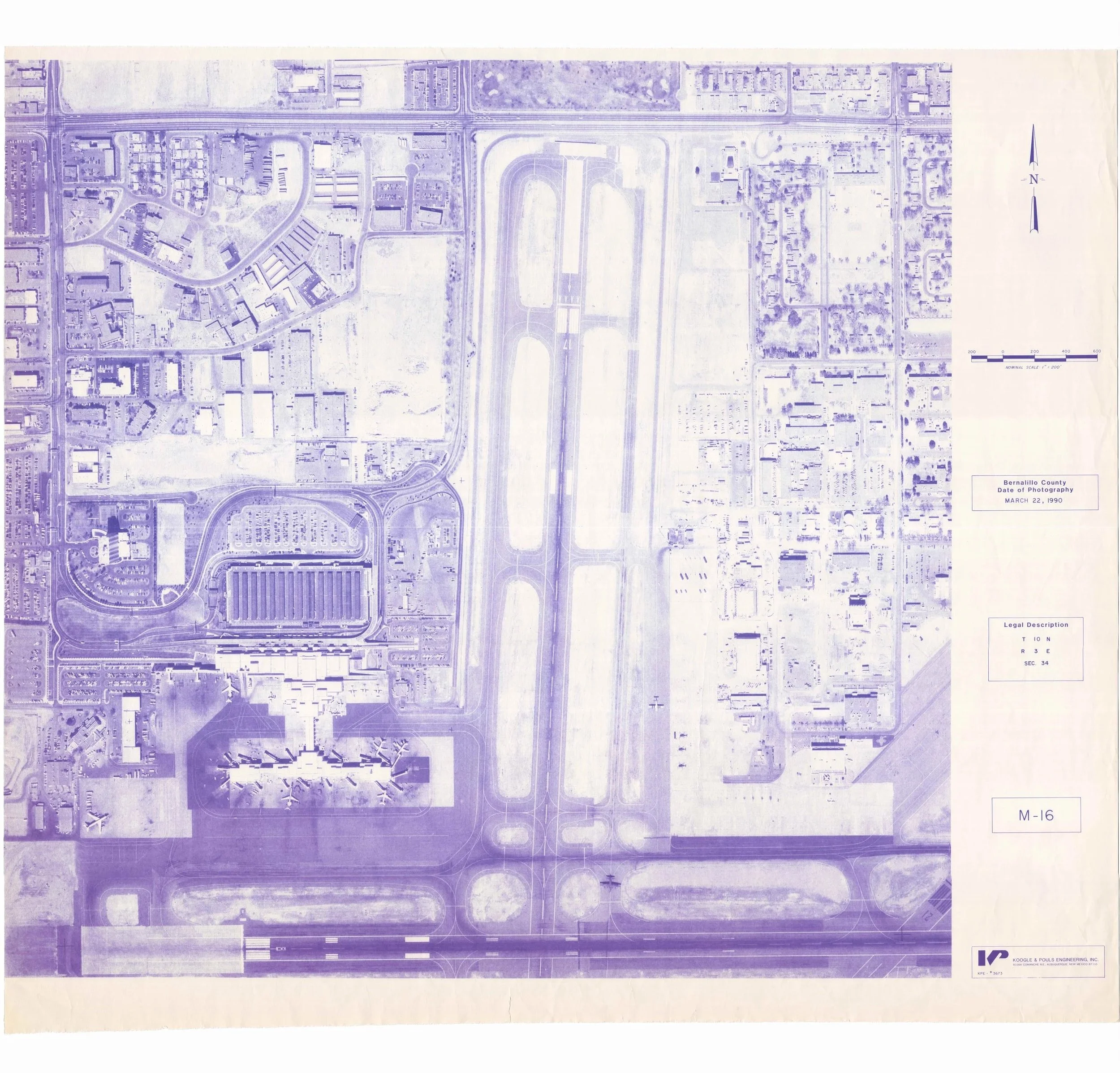
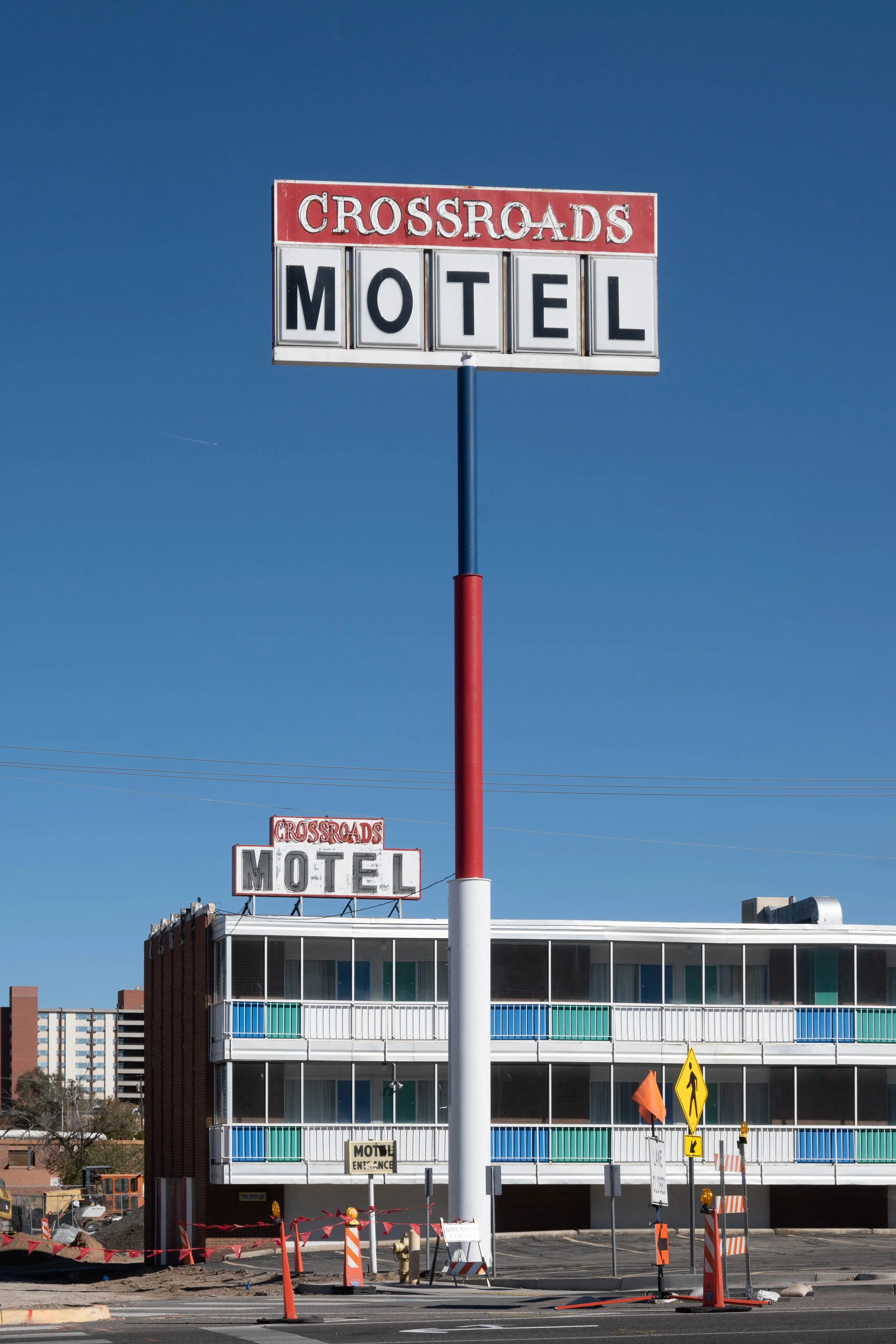
For five months I lived in Albuquerque while on exchnage at Uni. During that time I became increasingly interested in the strange relationship between the city's landscape, its military infrastructure and its tourist identity. Albuquerque is a city shaped by aviation and the military. Sandia National Laboratories began here in 1945 as part of the Manhattan Project, developing the engineering, testing and assembly of nuclear weapons. Today, the Kirtland Underground Munitions and Maintenance Storage Complex, south of the city, is believed to contain one of the largest concentrations of nuclear weapons in the United States.
This history is difficult to see in the city itself. It exists alongside the ordinary: the airport, the roads, suburban development, tourist brochures and the enormous mountain range which gives Albuquerque its identity. Sandia Mountains 2 was an attempt to make that invisible history briefly visible. The mound could be read as rubble from a nuclear disaster, but it could just as easily be construction waste. It sits somewhere between landscape, sculpture and leftover material.
I was particularly interested in the site's own history. The 17/35 runway had been part of Albuquerque's airport infrastructure, and the abandoned land around it had become a liminal space for artists to lurk, for people towatch aircraft and for the police to suspiciously meet civilian cars... The mound was therefore both a found object and an intervention: something already there, given a new identity simply through context and a plaque. I knew that the site was likely to be developed, so the work was deliberately temporary. It was a liminal monument, existing for a short period before the landscape itself changed.
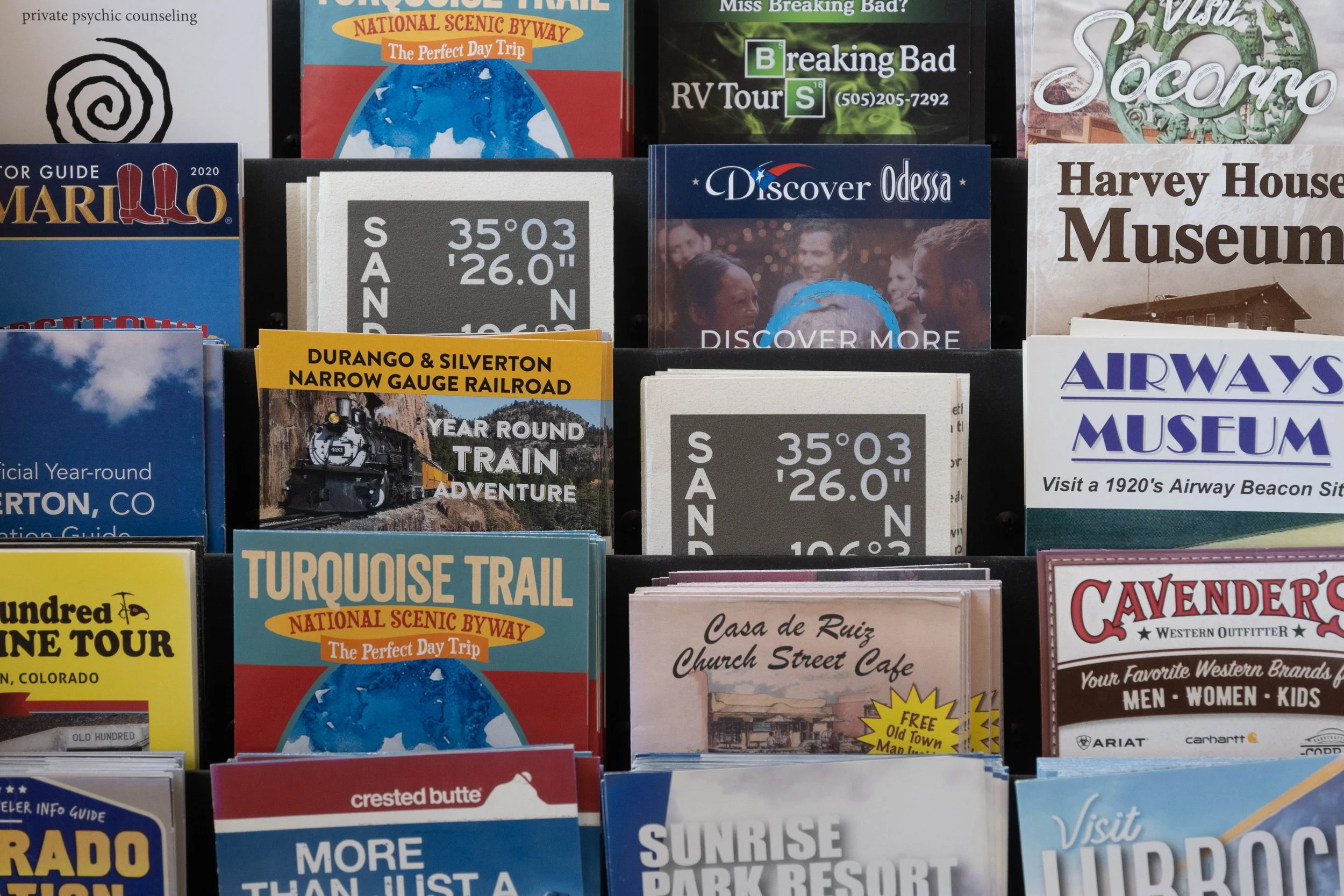
The tourist attraction became part of the work. I was fascinated by the absurd roadside attractions which are scattered throughout America, the World's Largest Pistachio, giant roadrunners, enormous objects which become destinations simply because somebody has decided that they are worth looking at. I began inserting Sandia Mountains 2 into motel brochure racks and tourist information points, treating the work as though it were a genuine attraction. I also created a Tripadvisor listing and invited visitors to review it.
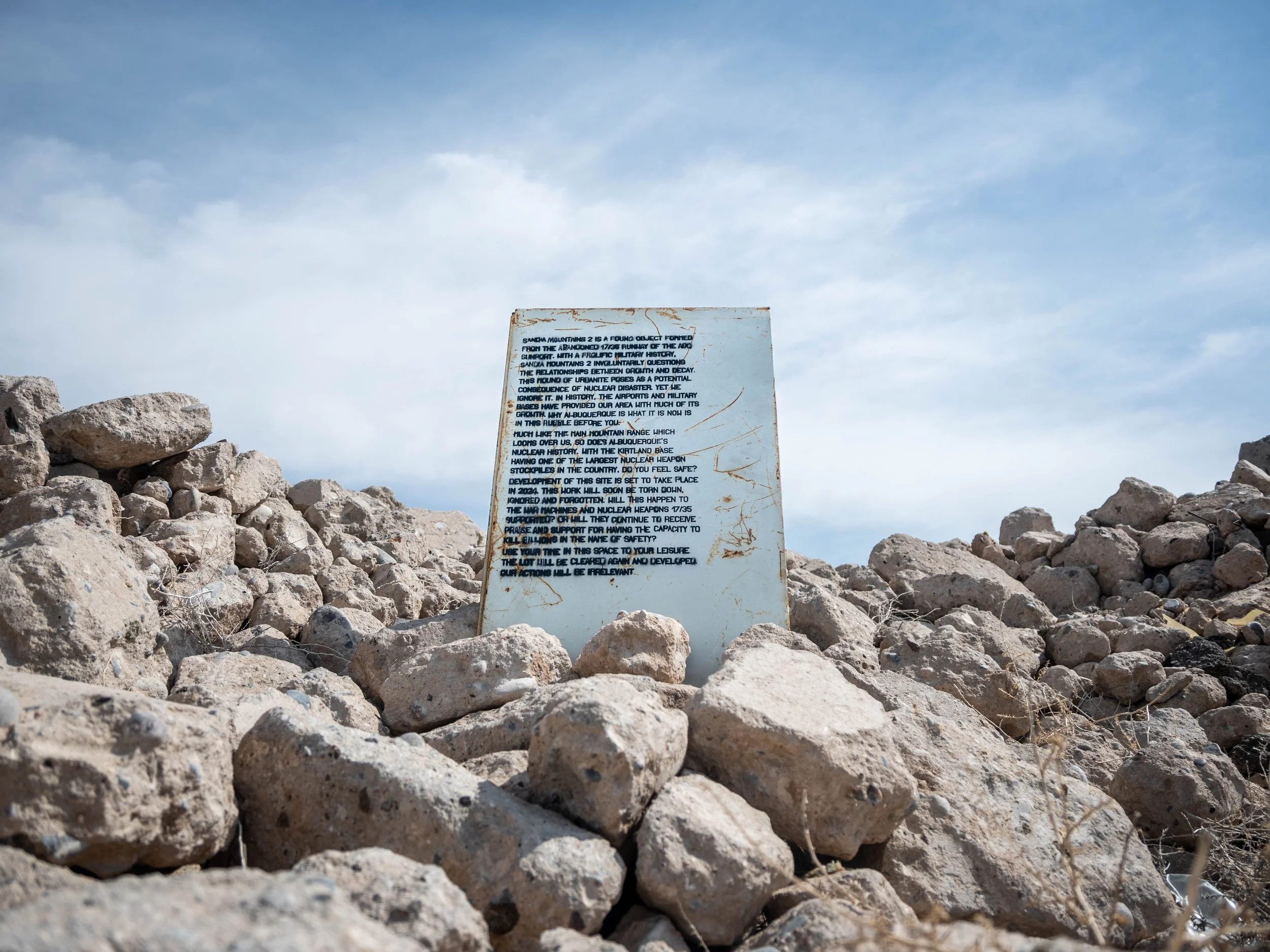
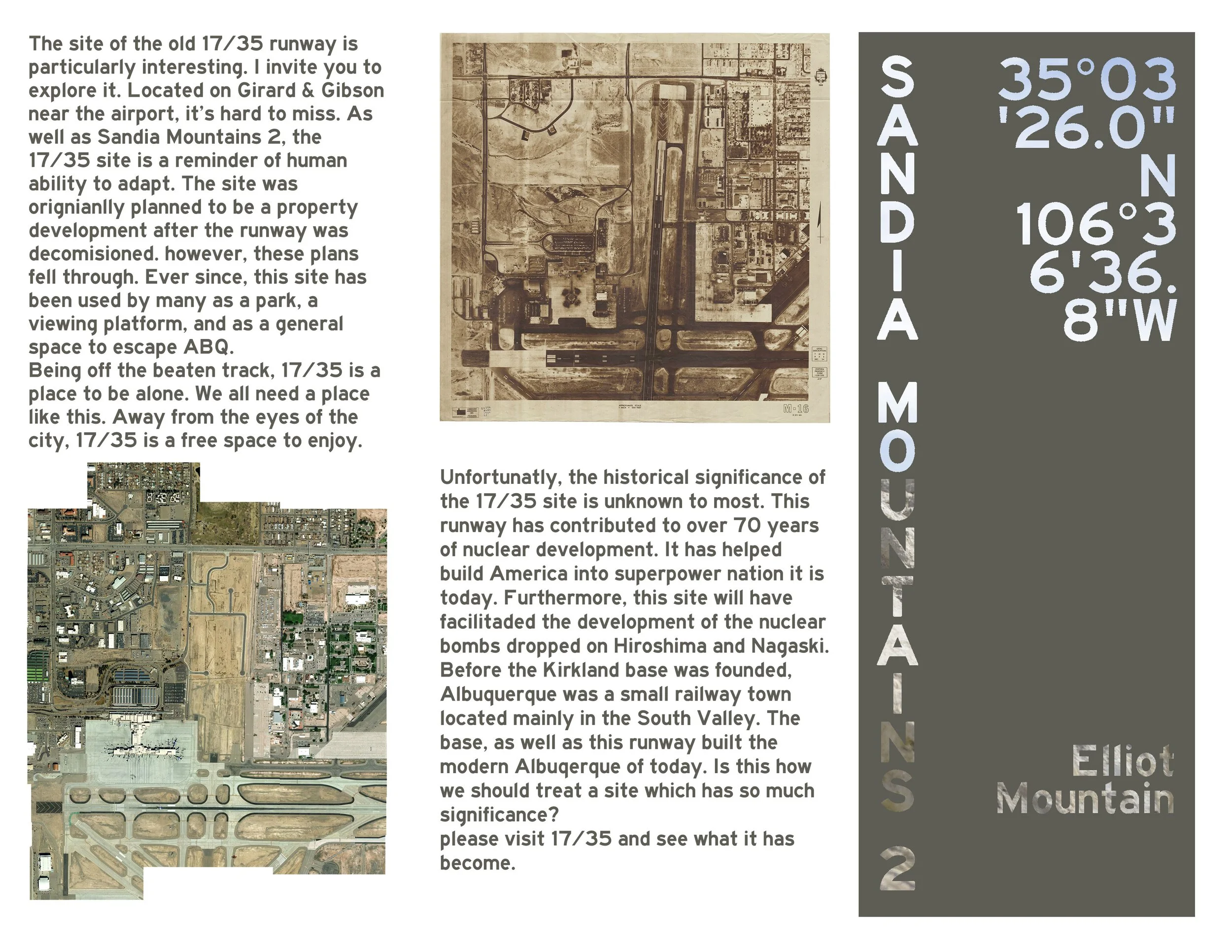
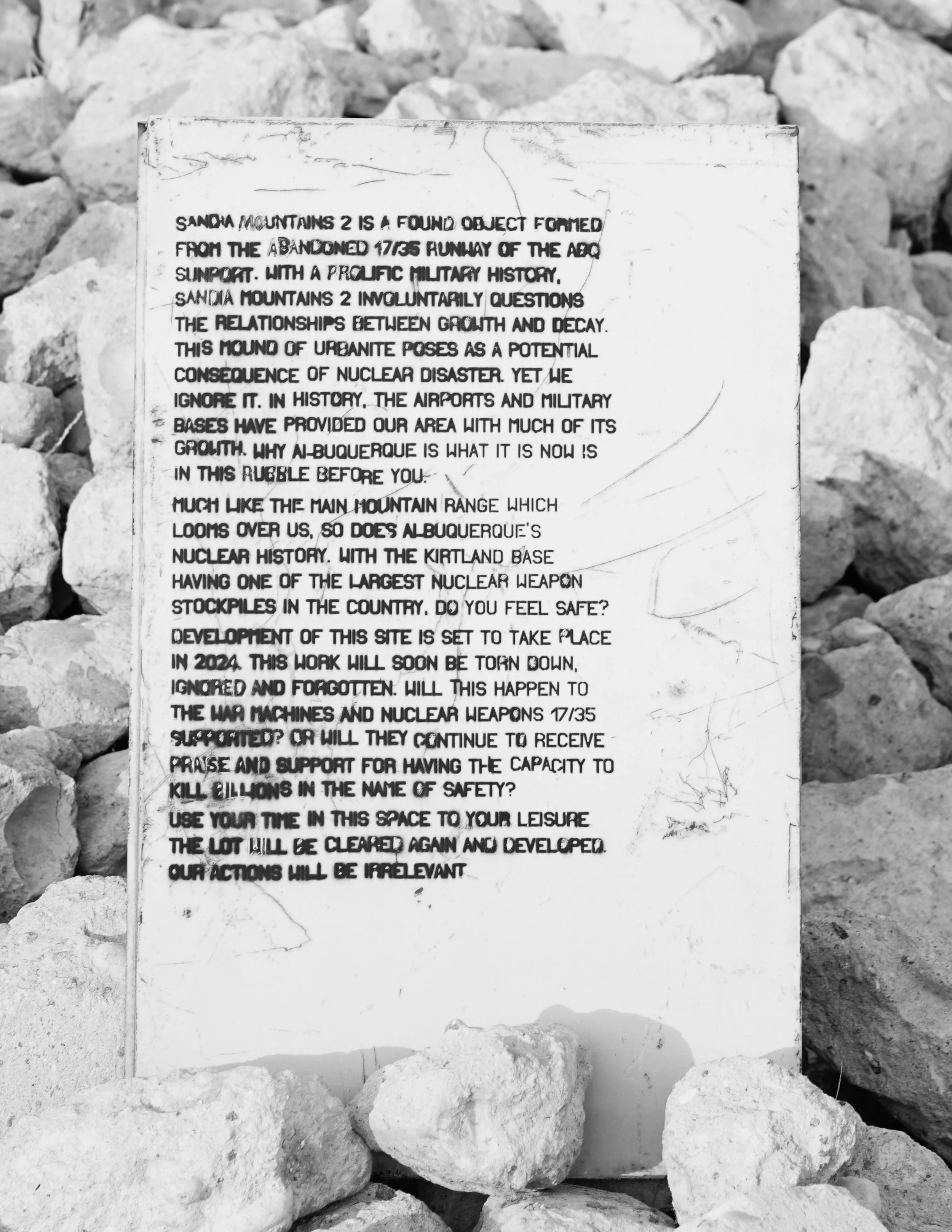
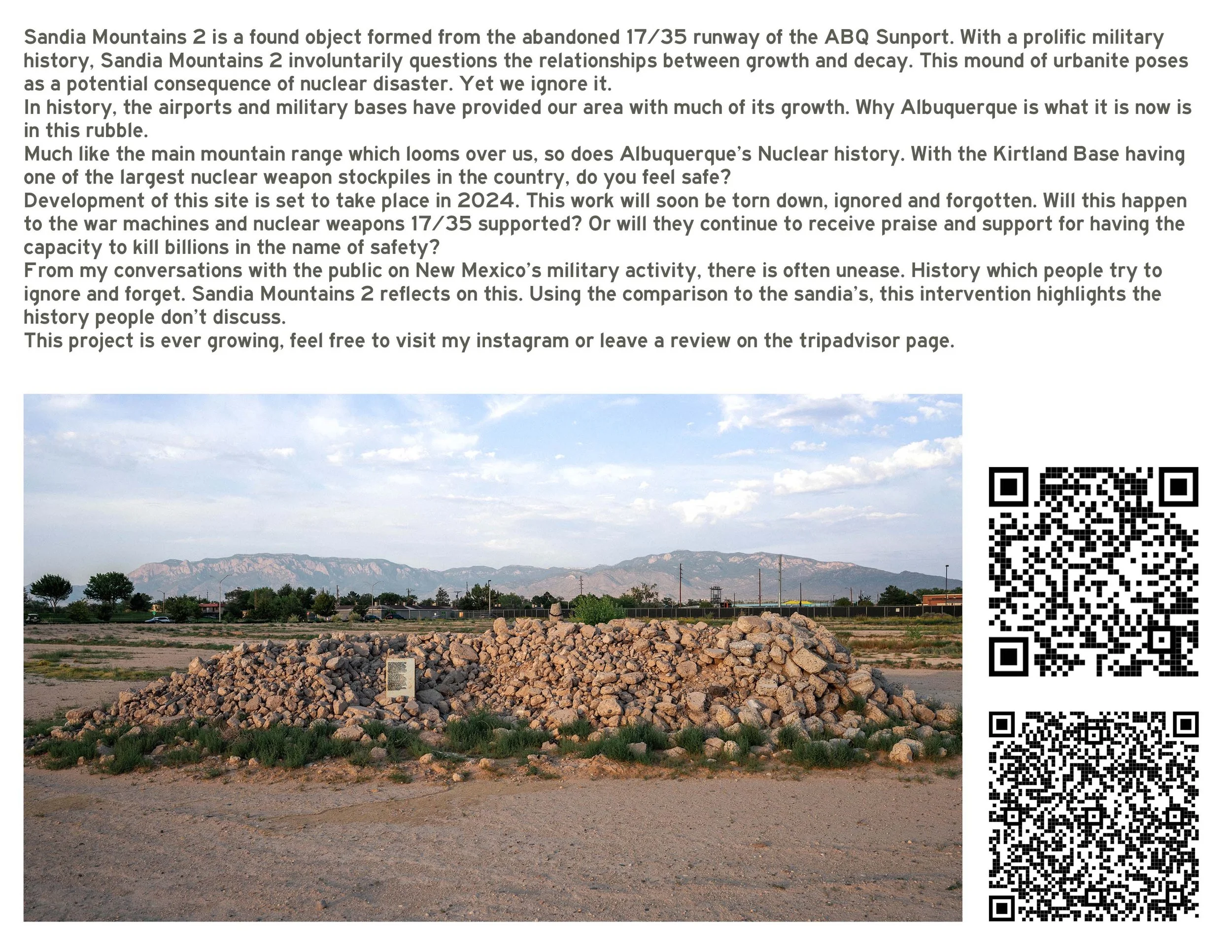
There was something particularly enjoyable about trying to make people believe in the mountain. A pile of rubble became a landmark. A plaque gave it an official history. A Tripadvisor page gave it an audience. The whole thing operated somewhere between a lie and an open secret. I like that uncertainty: the moment when something obviously ridiculous begins to acquire the authority of an institution.
This is an important part of my wider practice. I often find myself trying to make things appear official, using the visual language of museums, tourism, signage and public information to create a believable fiction. The work relies on the gap between what something is and what we are told it is. Sandia Mountains 2 became a way of thinking about how easily value, history and even landscape can be manufactured through presentation.
There is also a darker side to that joke. Albuquerque's nuclear history is not simply historical. Sandia continues to work on the US nuclear weapons stockpile, while the wider nuclear programme has left a much more complicated legacy across New Mexico and the Navajo Nation. Between 1944 and 1986, almost 30 million tons of uranium were extracted from Navajo lands, leaving more than 500 abandoned uranium mines and continuing contamination affecting land, homes and water. The machinery of nuclear power helped create the modern American Southwest, while its consequences have not been distributed equally.
In this sense, the rubble becomes a strange monument to growth and decay. Albuquerque's development, its airports, military bases and laboratories are all part of the same landscape. The mountain behind the work is real; the mountain in front of it is not. Yet both are products of how we choose to look at a place.
Sandia Mountains 2 no longer exists. The site has changed and the mound has disappeared. What remains is the documentation, the photographs, the brochure, and the Tripadvisor listing, a tourist attraction for a place that isn't there anymore.
Perhaps that is what a monument does. It gives something an identity long enough for us to believe it existed.
I have other works where i try to address similar themes. If you are in Albuquerque and want to experience a shameful place, please visit the Nuclear museum, where you will find very little attention to the disasters at Hiroshima or Nagasaki, and also a childrens playground next to replica nuclear bombs and bombers. Its a very revealing experience i reccomend anyone should do.
ps. please steal the fat man and little boy earrings from the gift shop. No one should own these.