Taub
I have always been interested in pigeons because they occupy such a strange position within our cities. They are everywhere, but are rarely really looked at. They live alongside us, feed from our waste and adapt to the environments we have created for them. They are often described as vermin, yet they are also incredibly resilient. At one point, pigeons were some of our most important messengers. Now they are largely ignored.
Pigeons reflect their environment. They adapt to the world they are given. I think there is something very human in this. I often think about my own habits in the same way: the things I consume, the routines I repeat and the way I can become absorbed in the same information over and over again. Social media has made this particularly obvious to me. I can spend hours consuming an endless stream of similar images, opinions and advertisements without really thinking about what I am taking in. The pigeon became a way of looking at these behaviours from the outside.
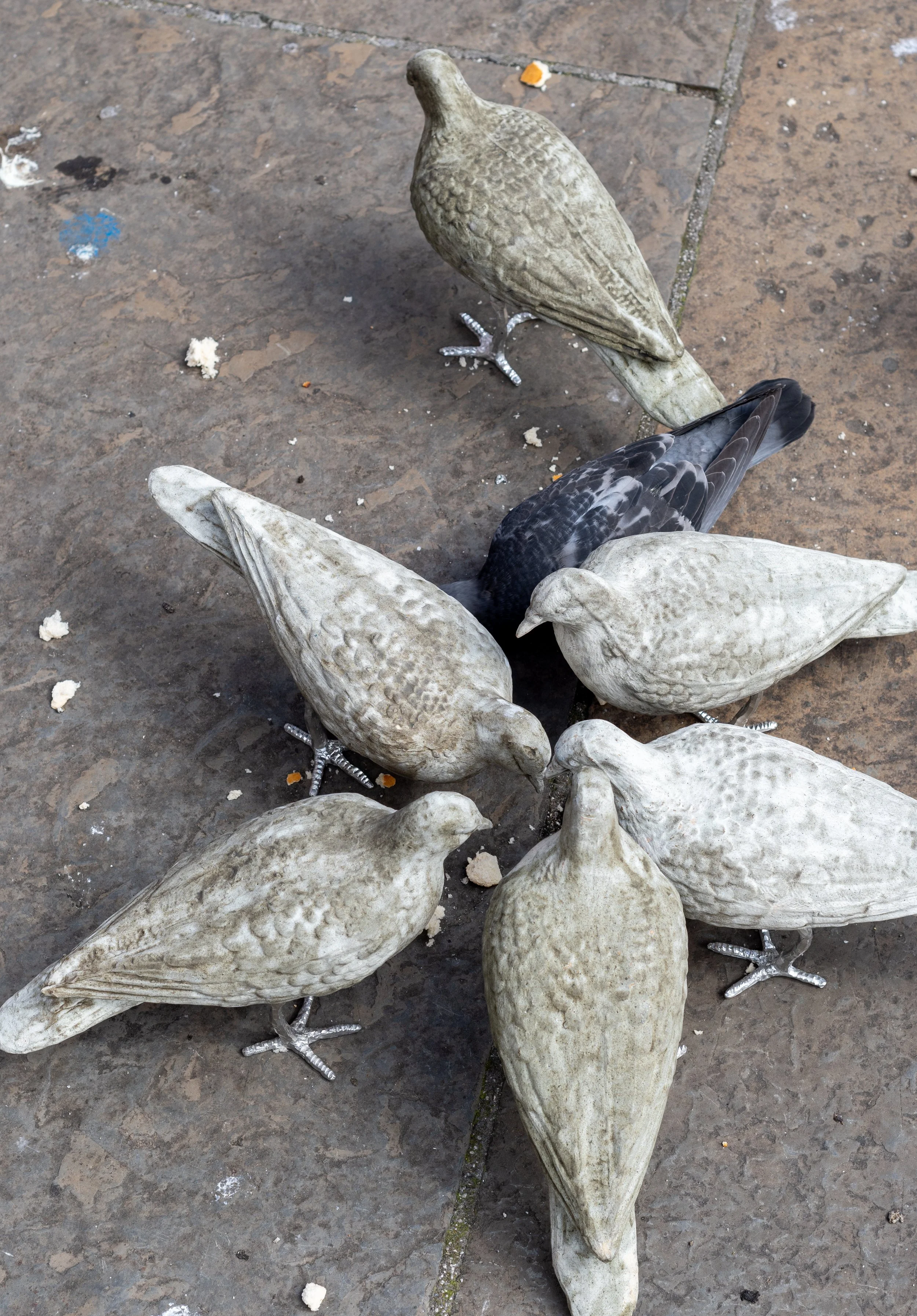
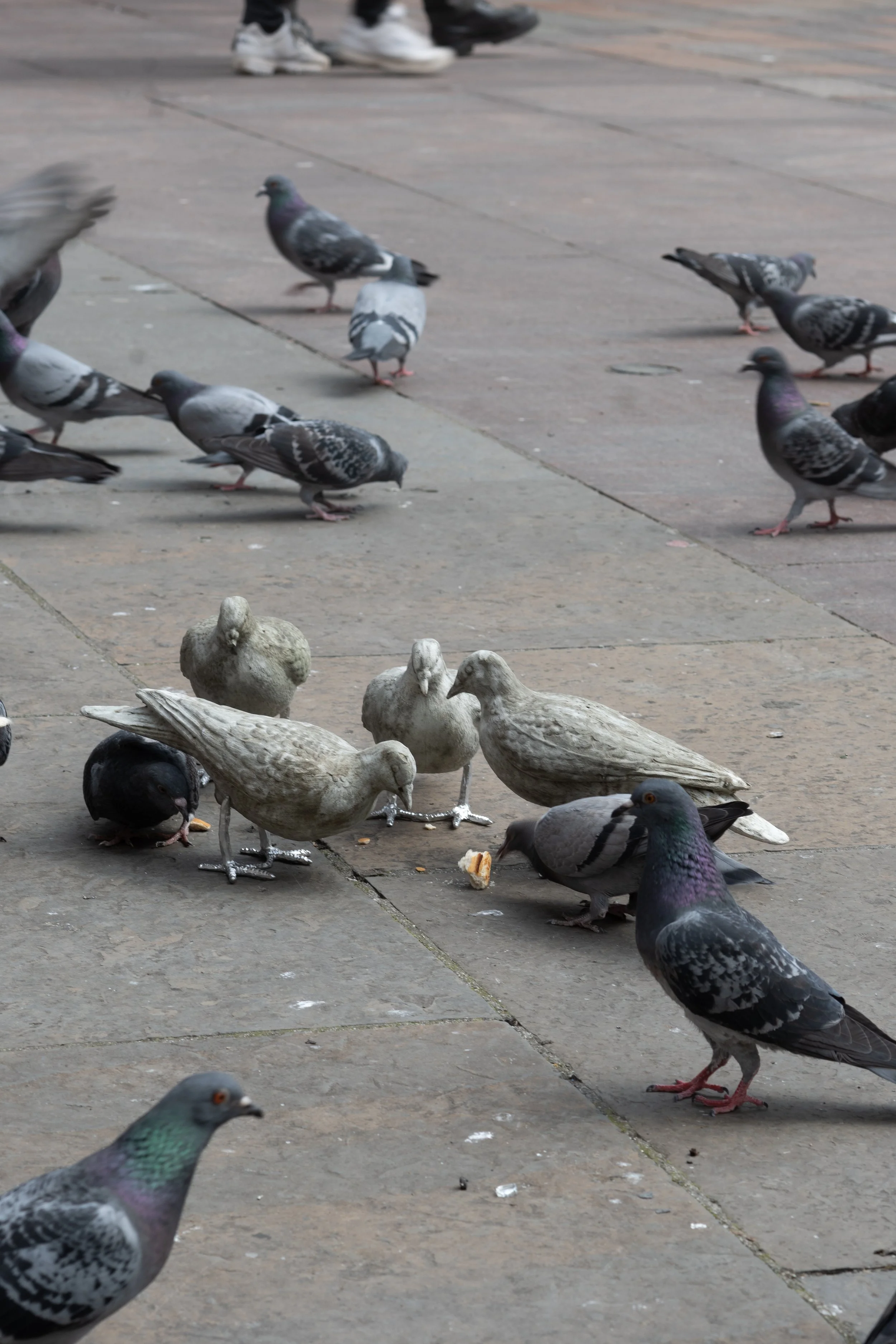
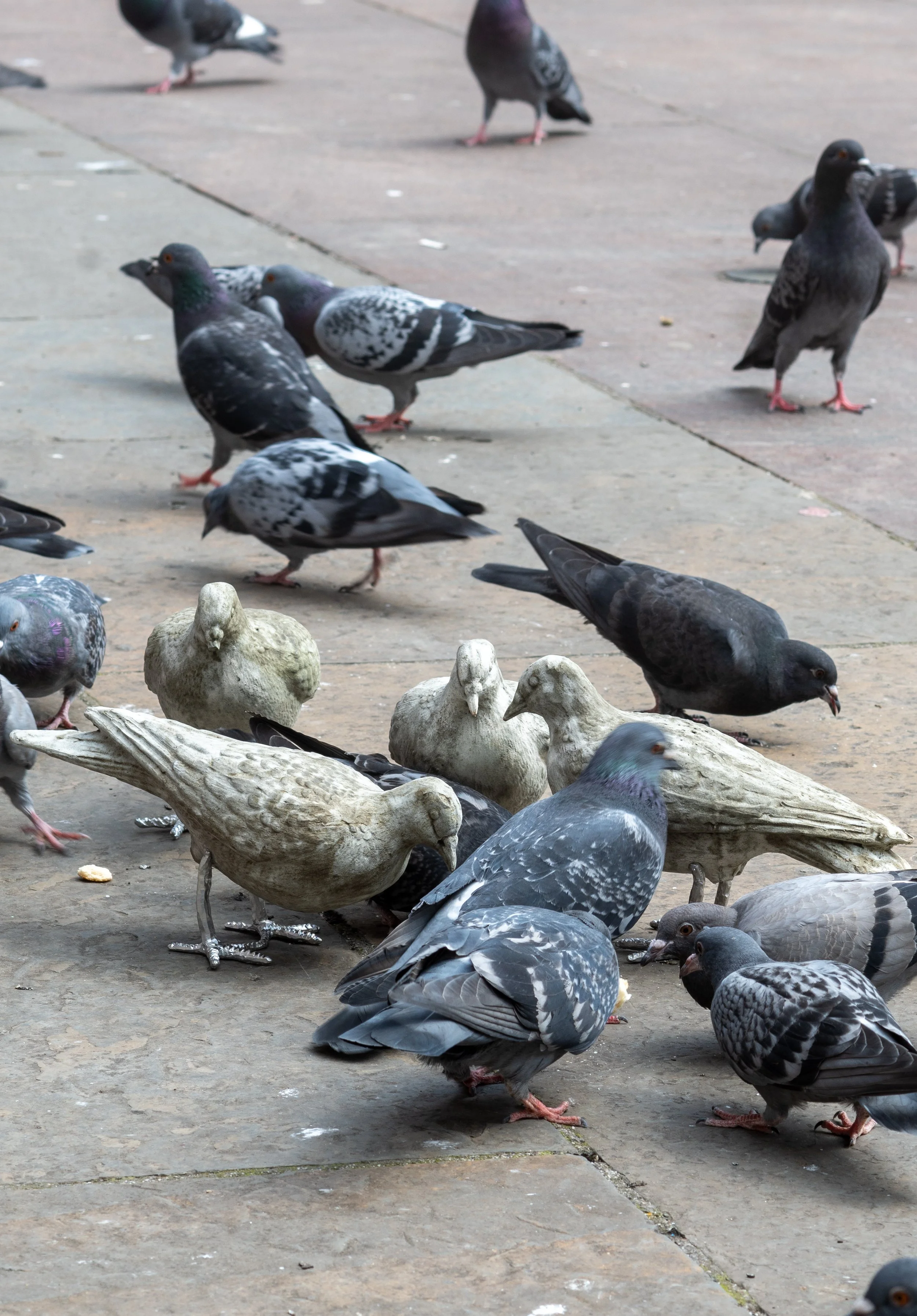
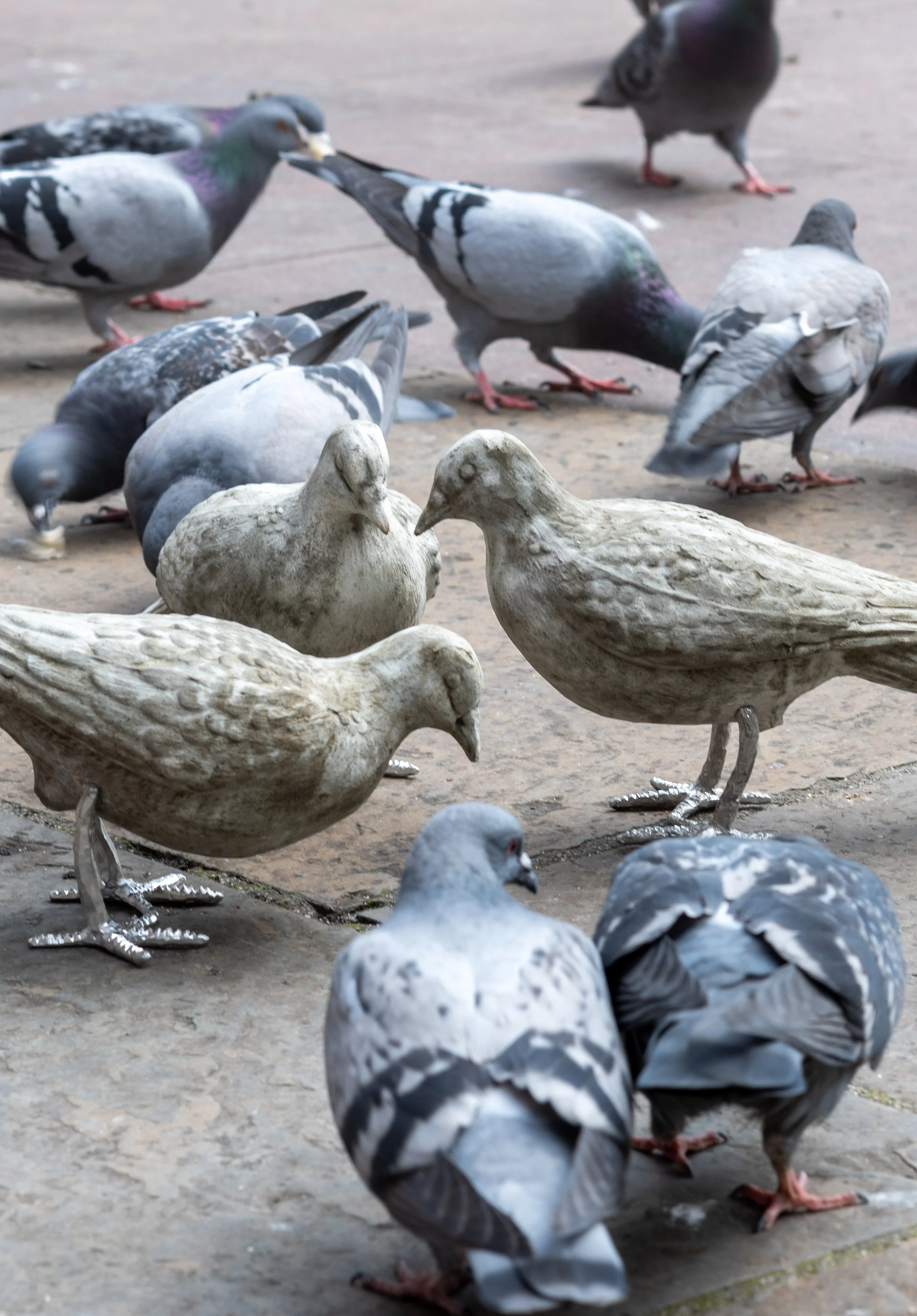
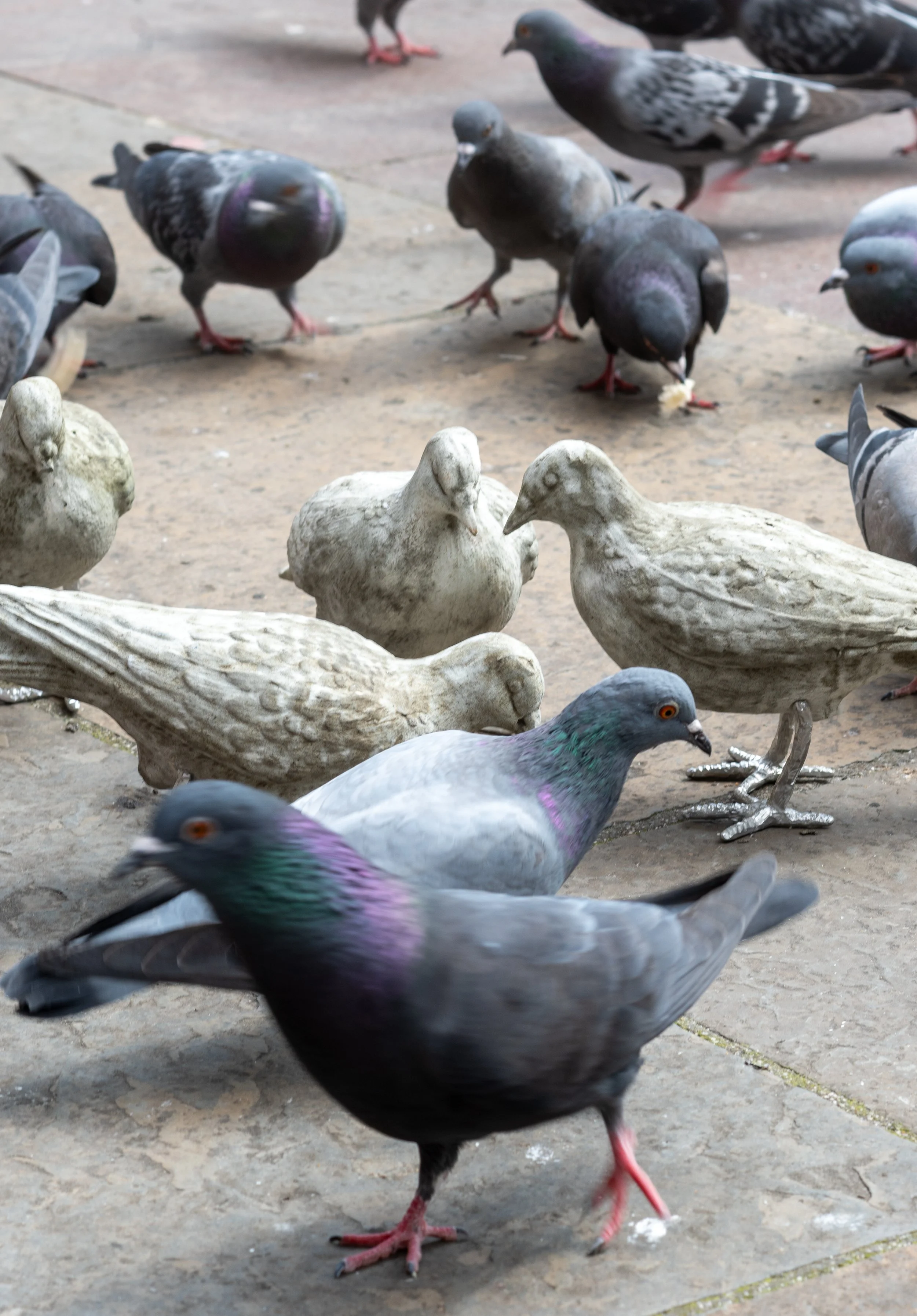
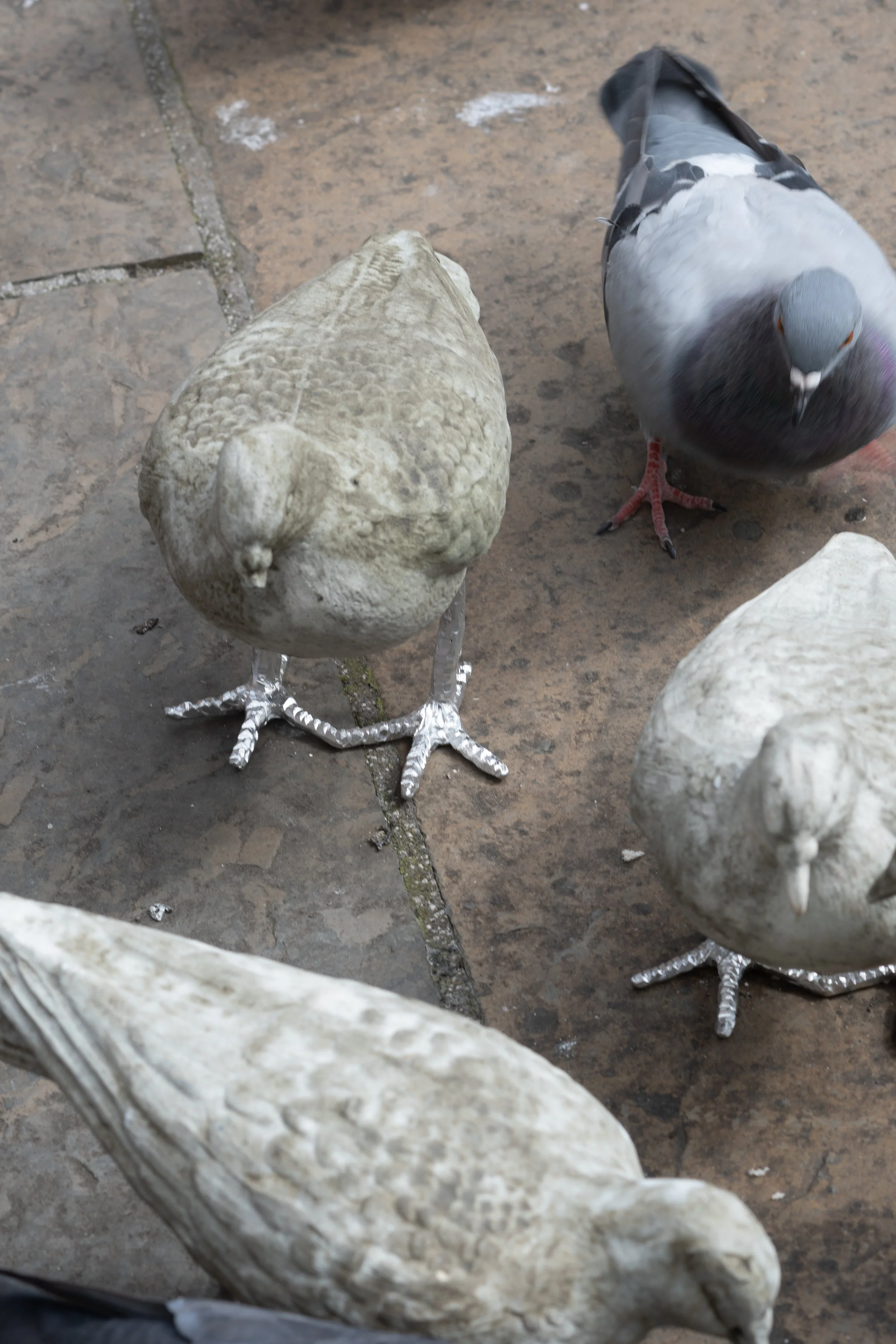
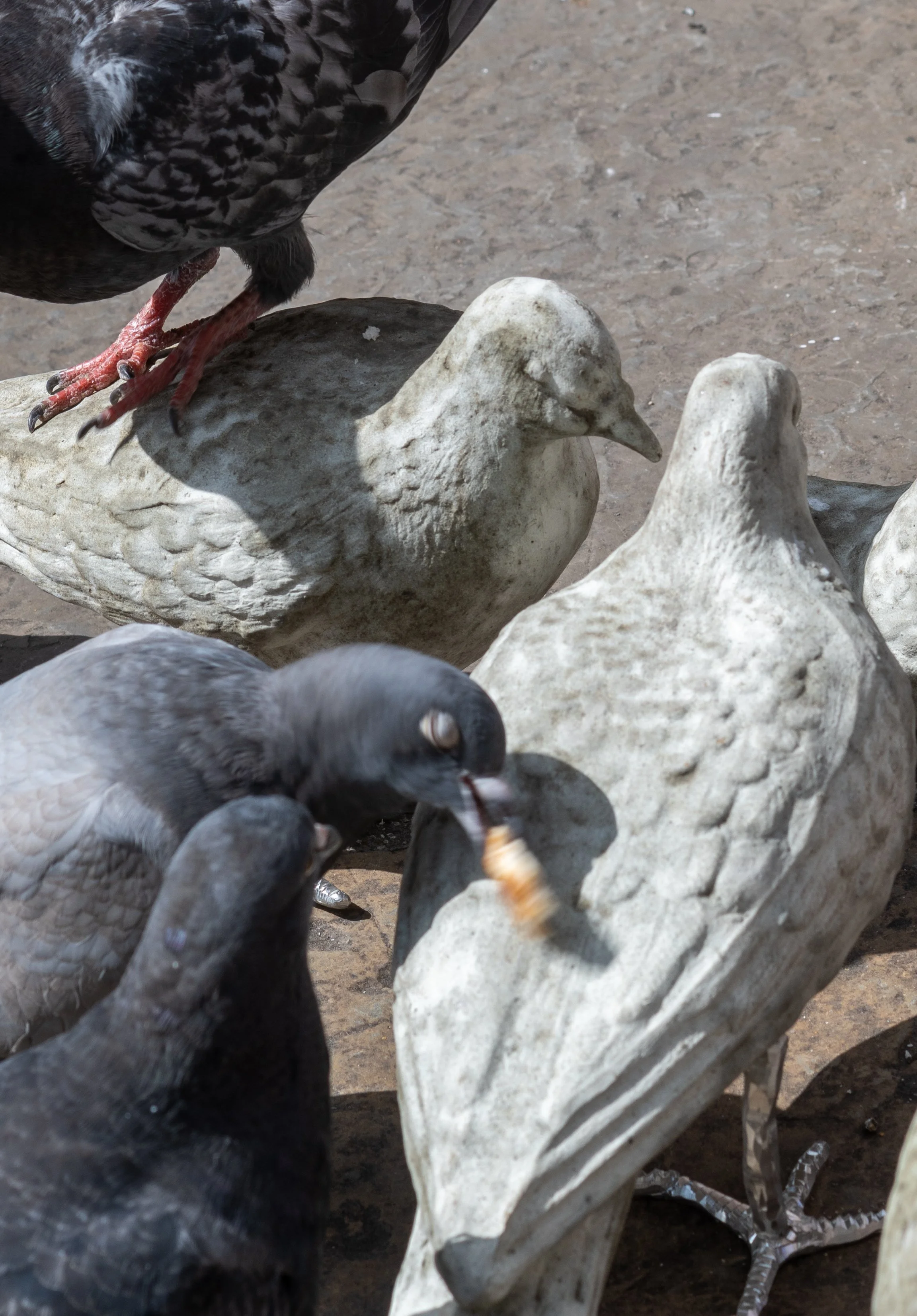
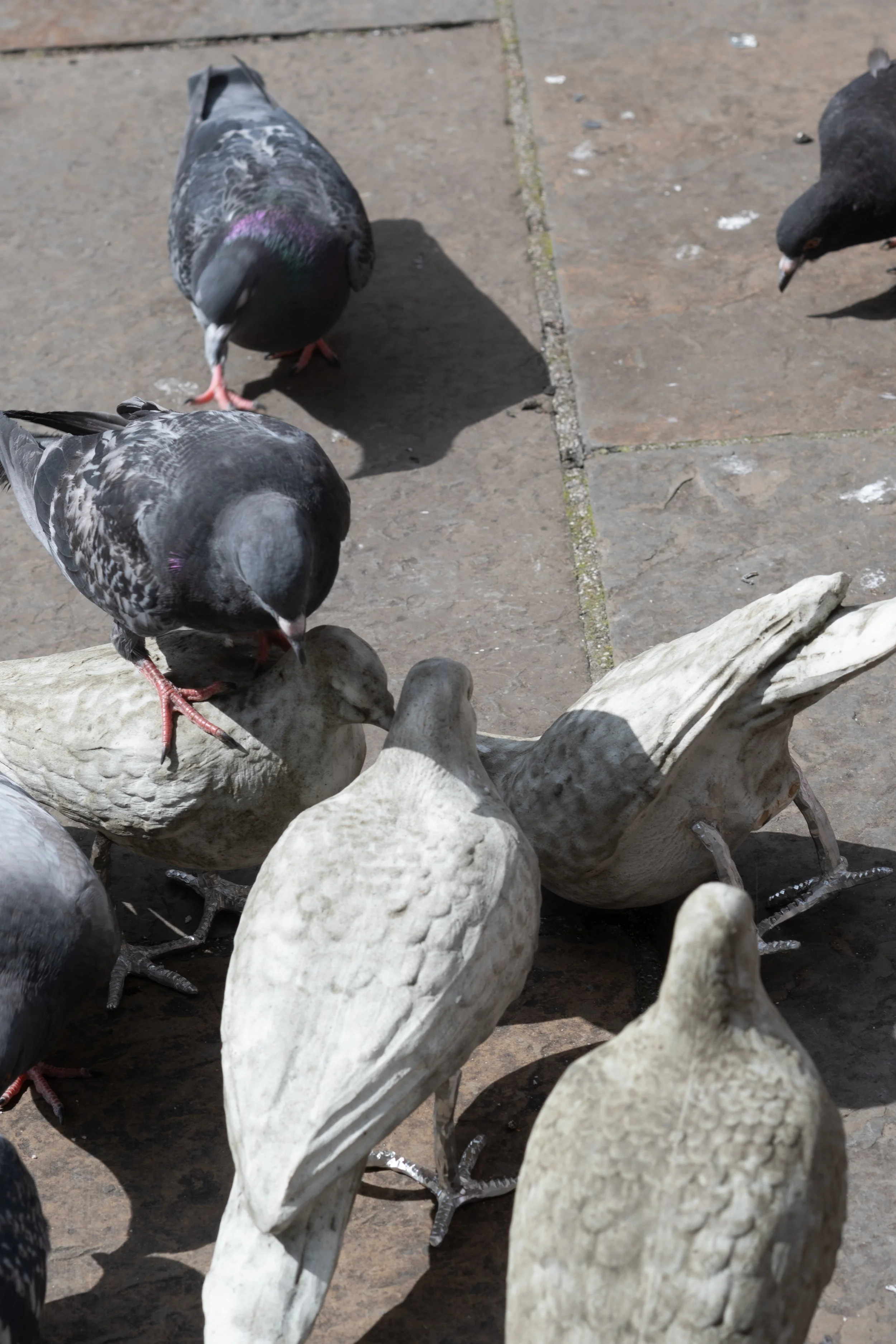
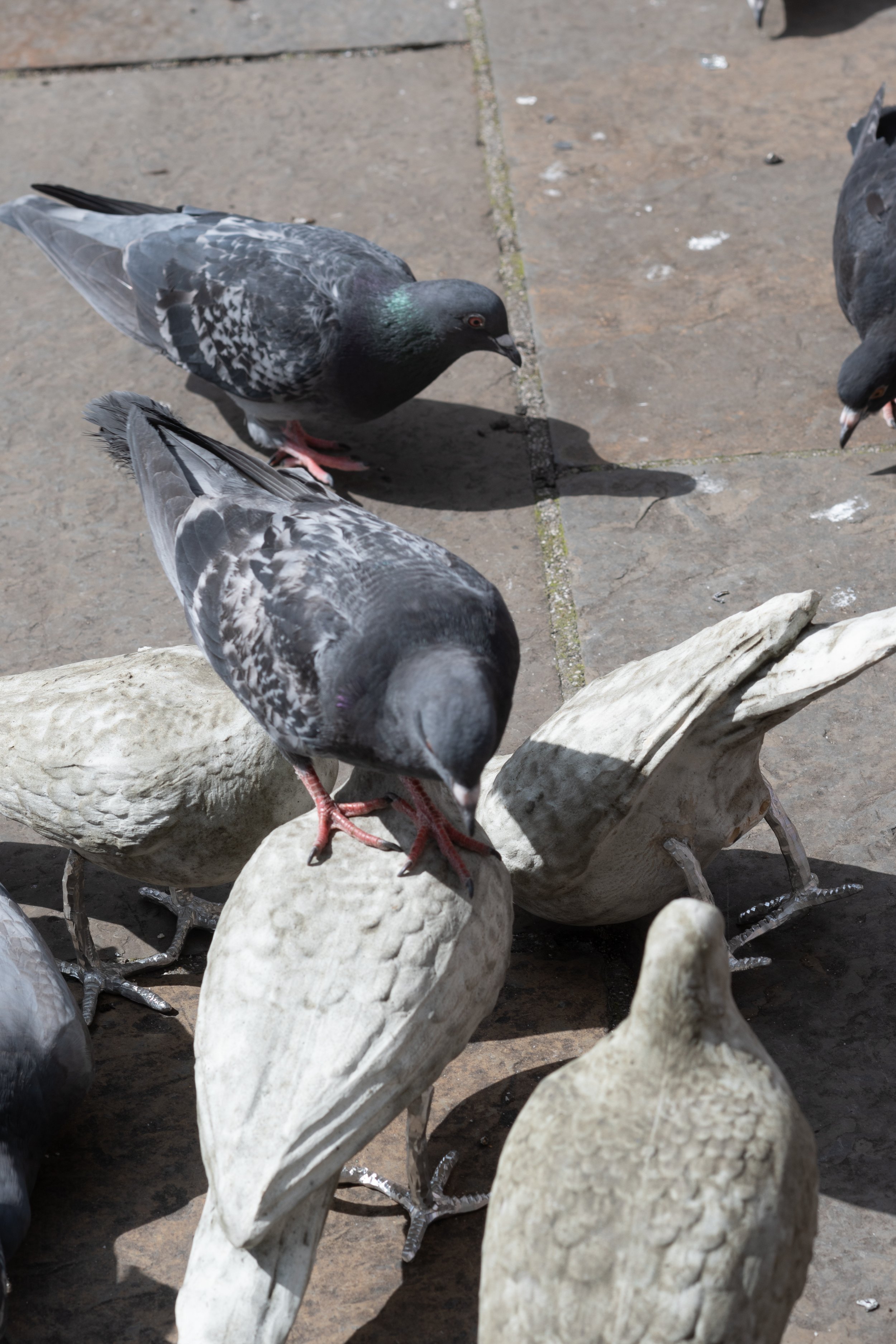
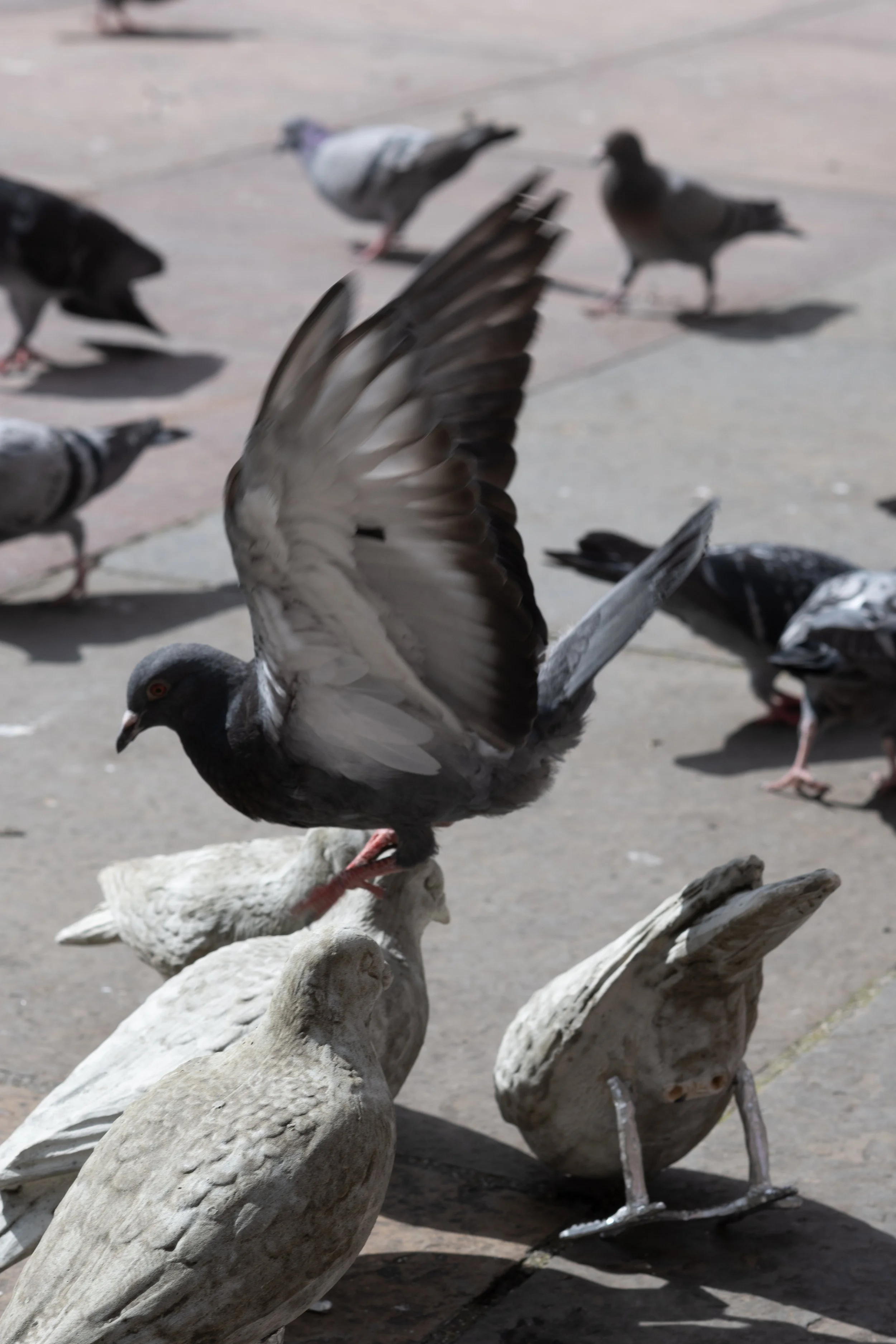
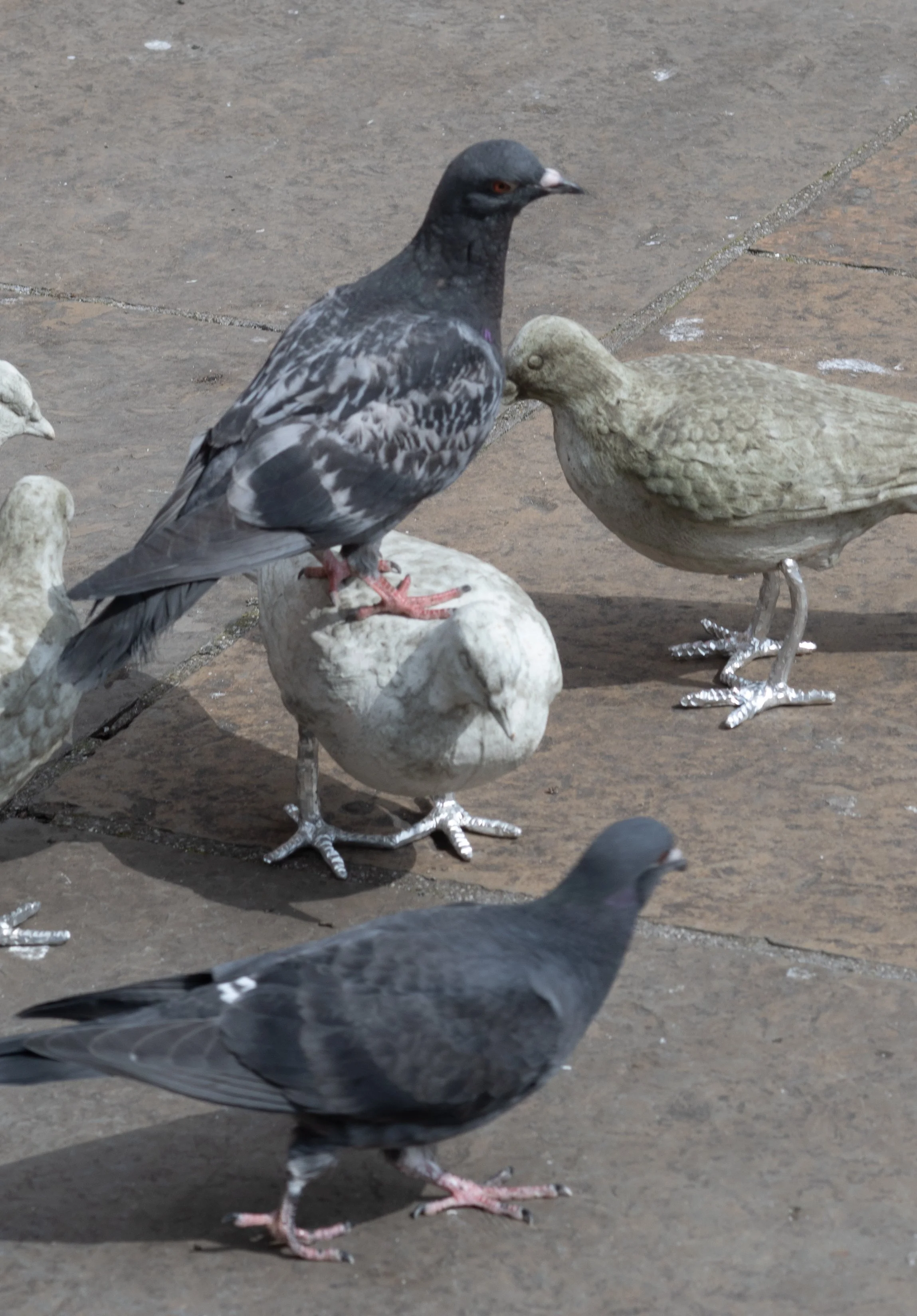
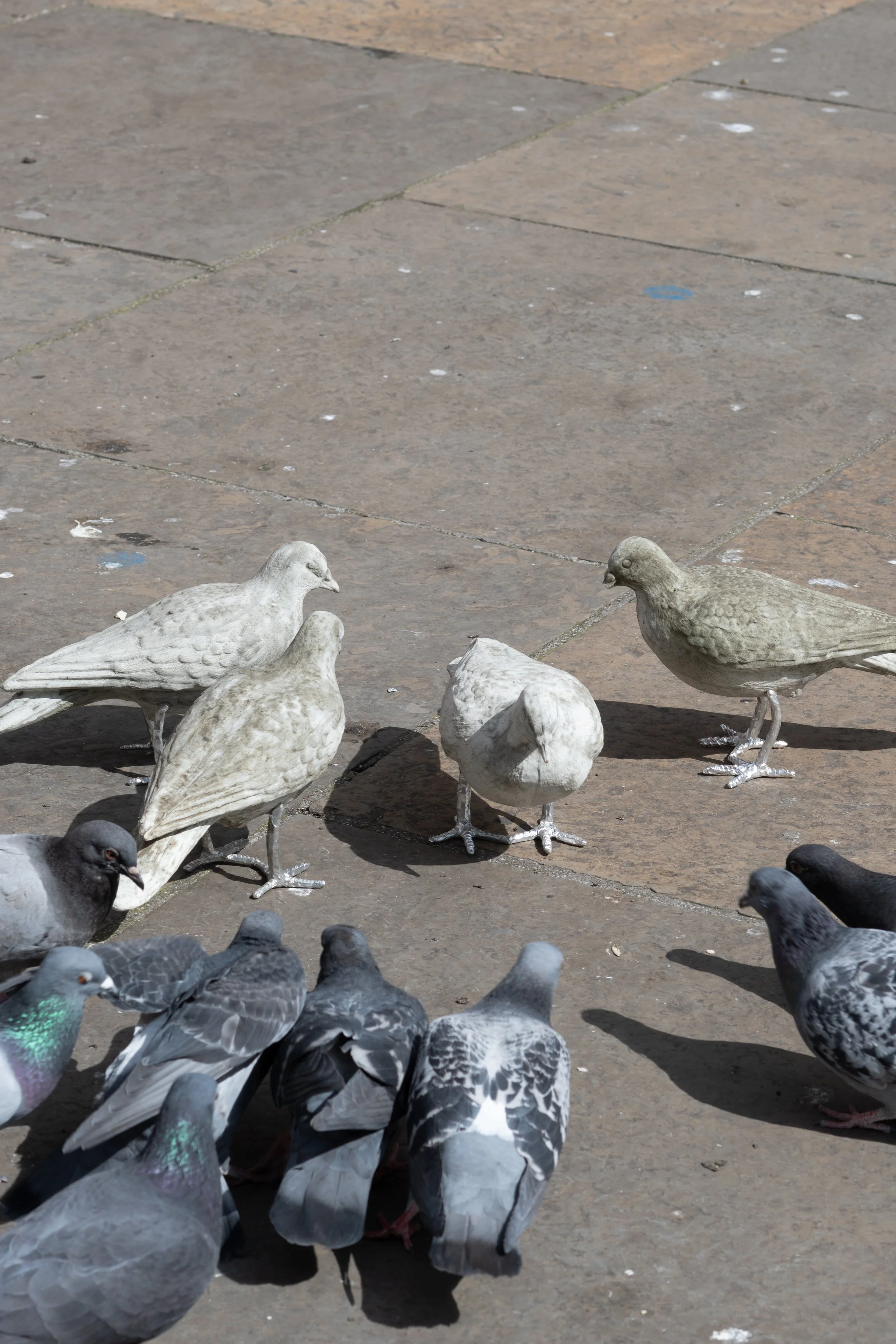
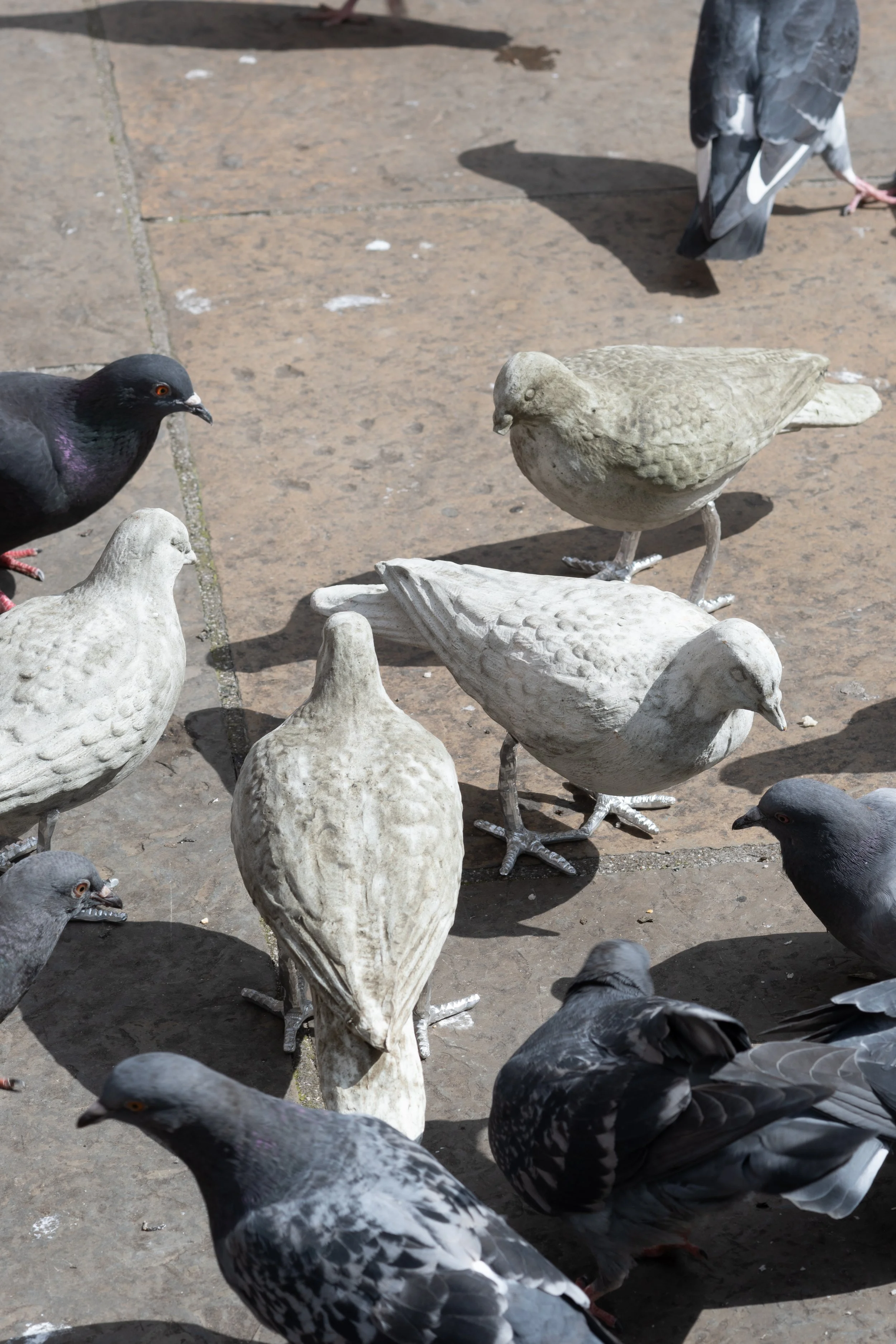
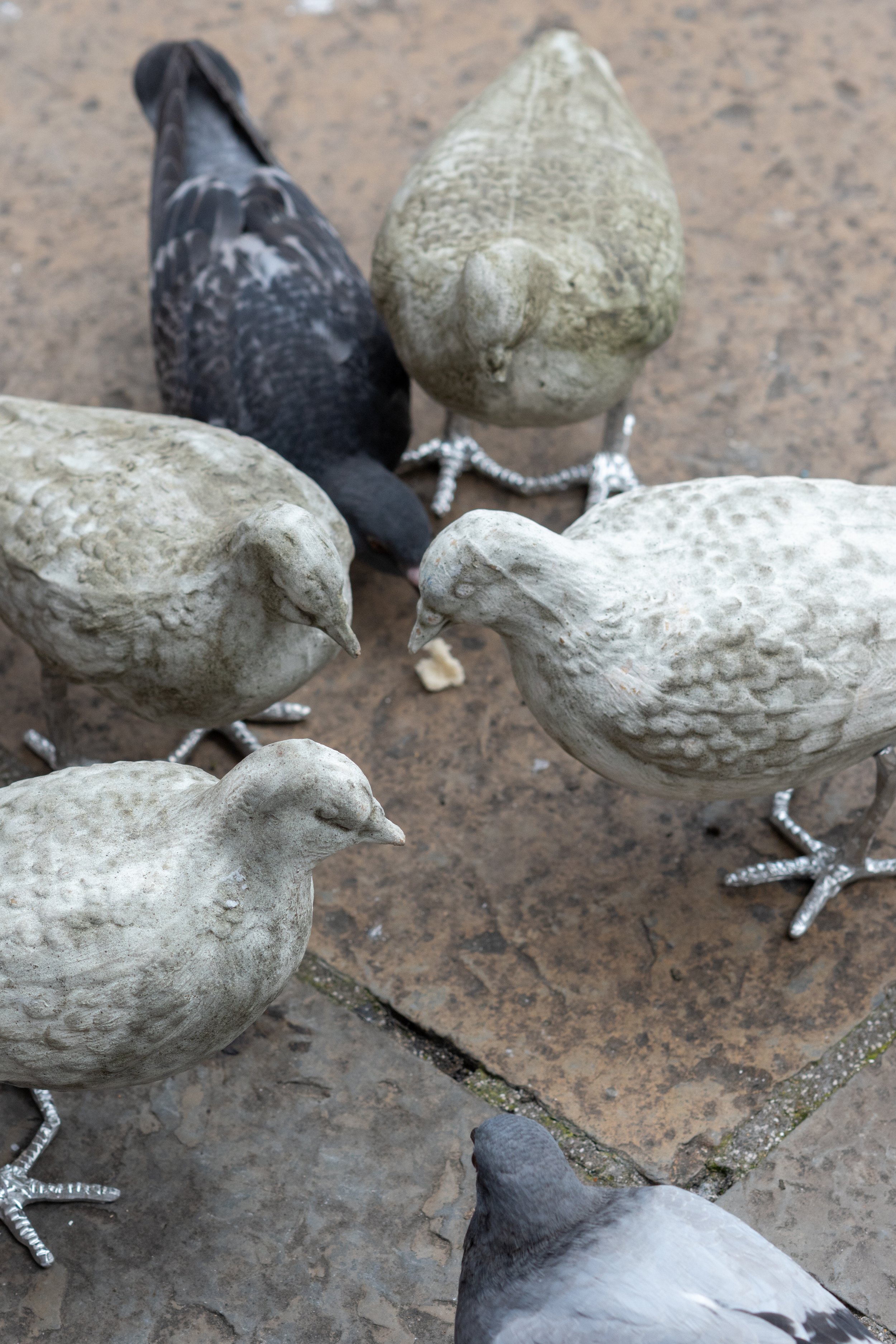
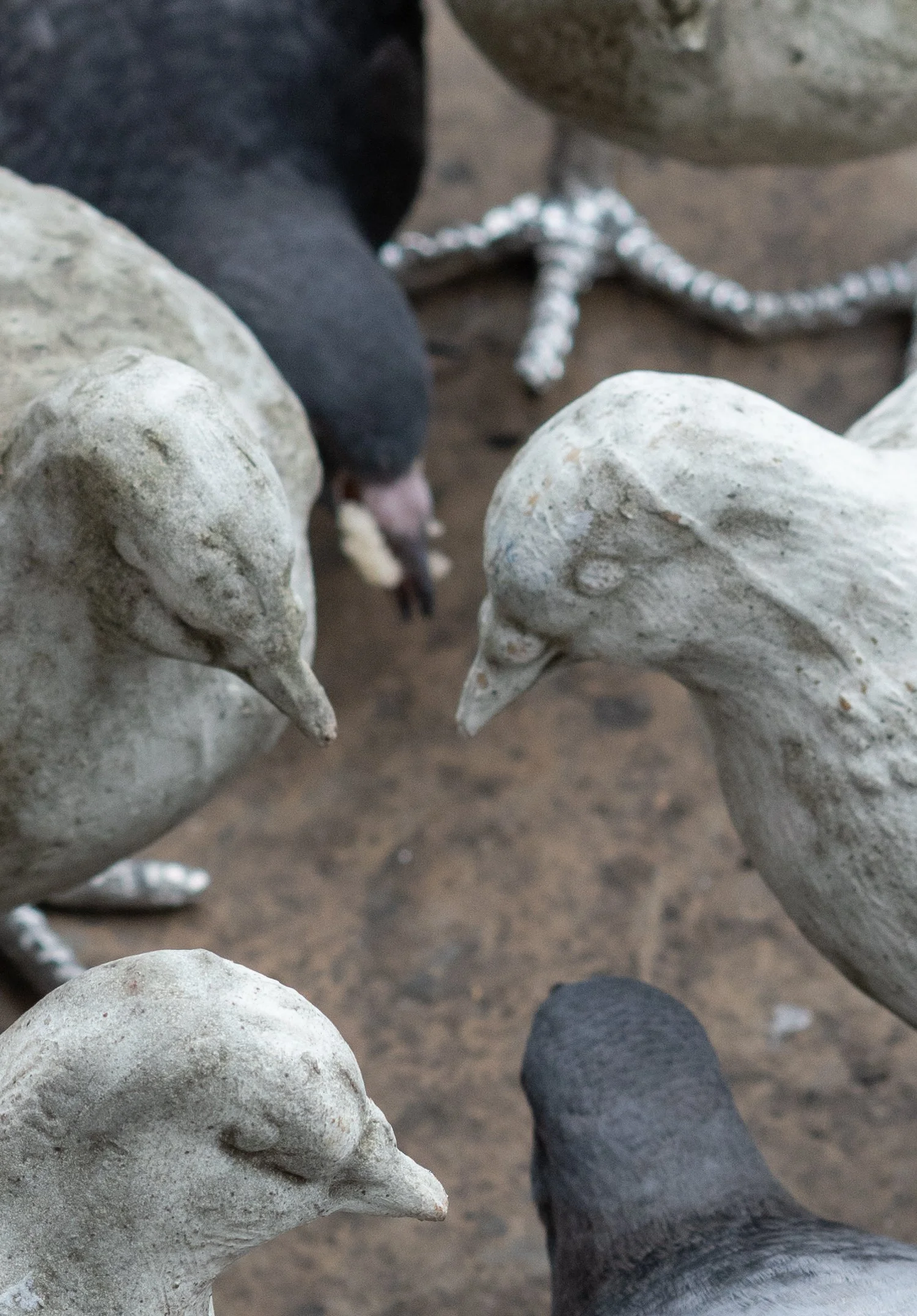
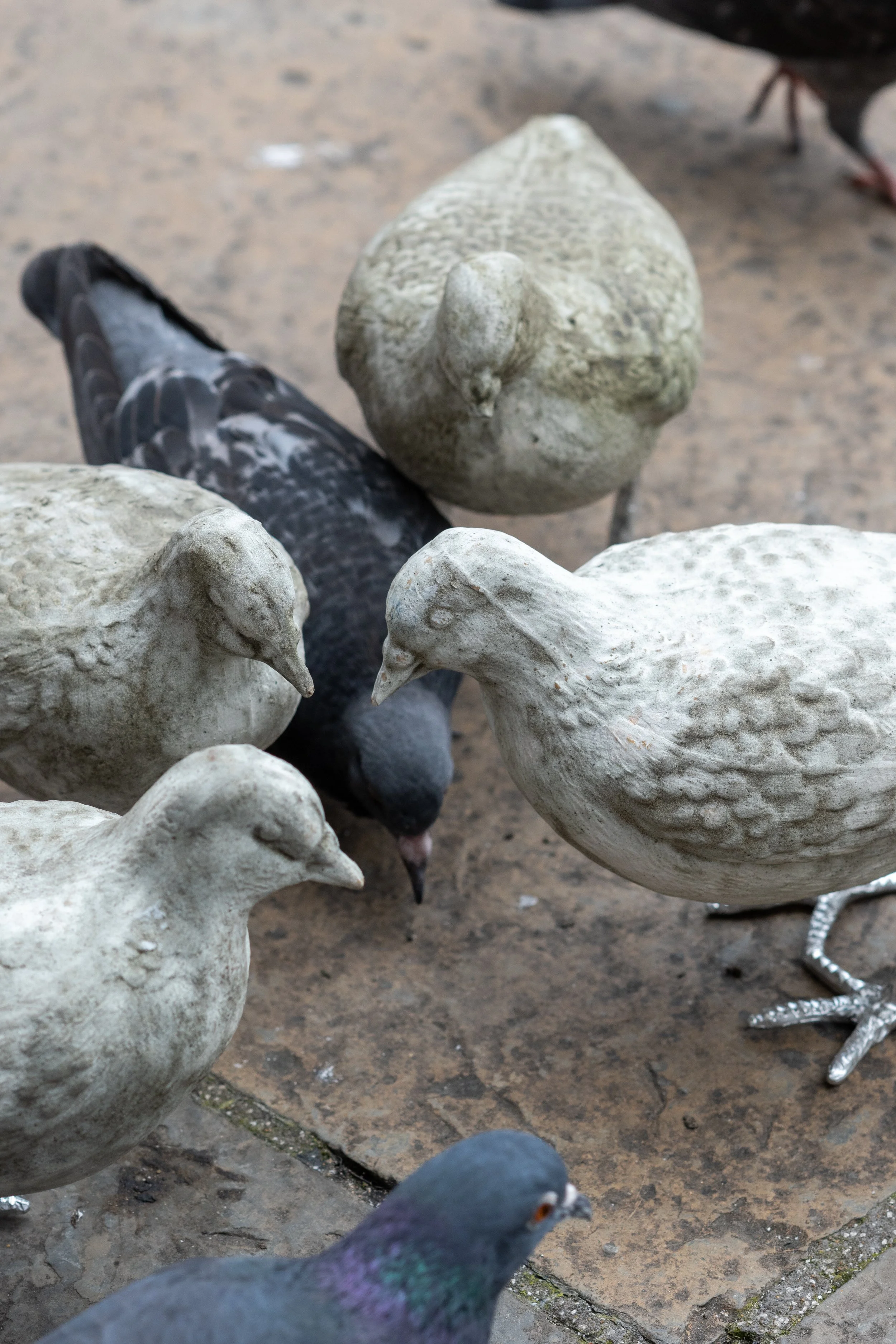
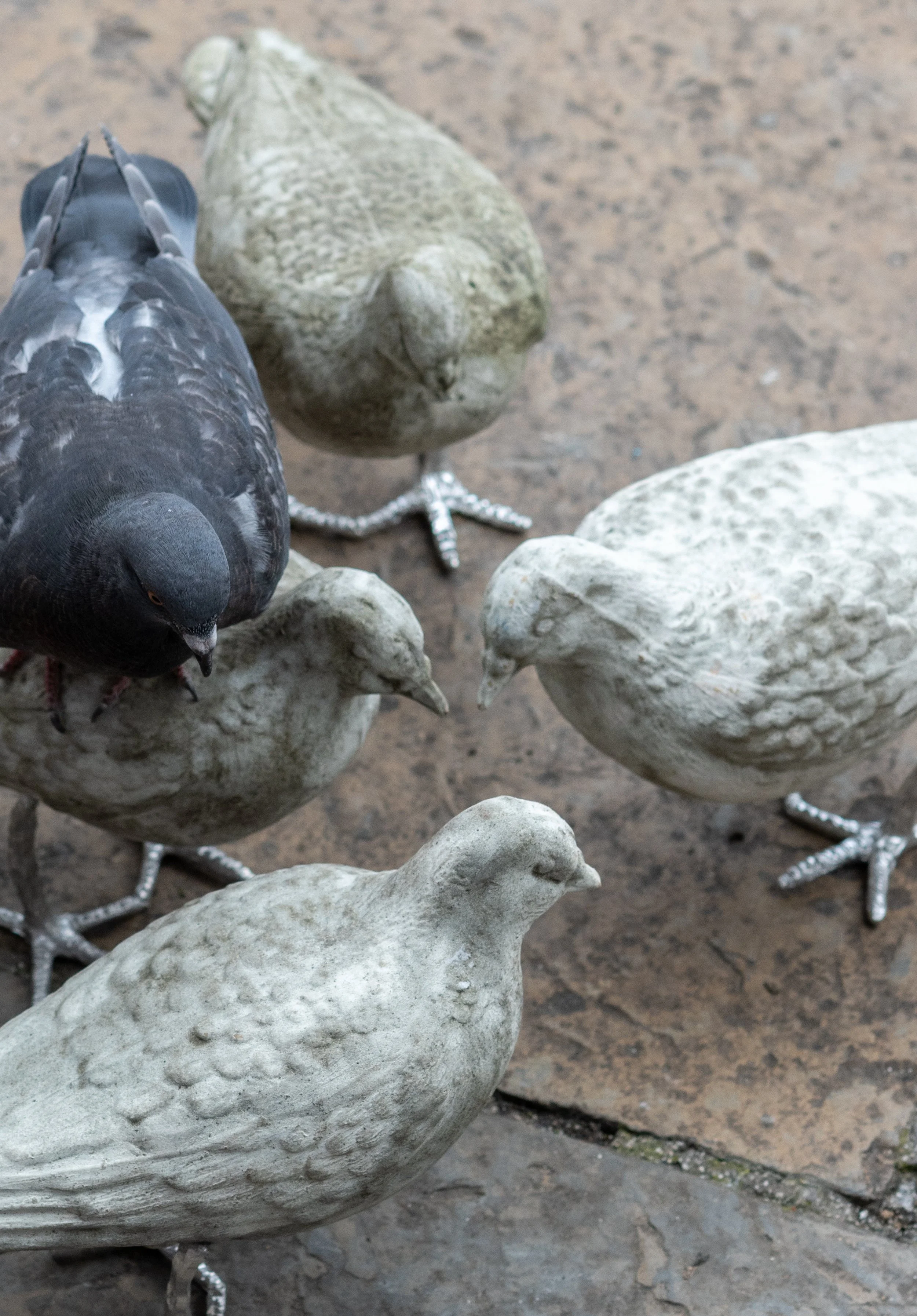
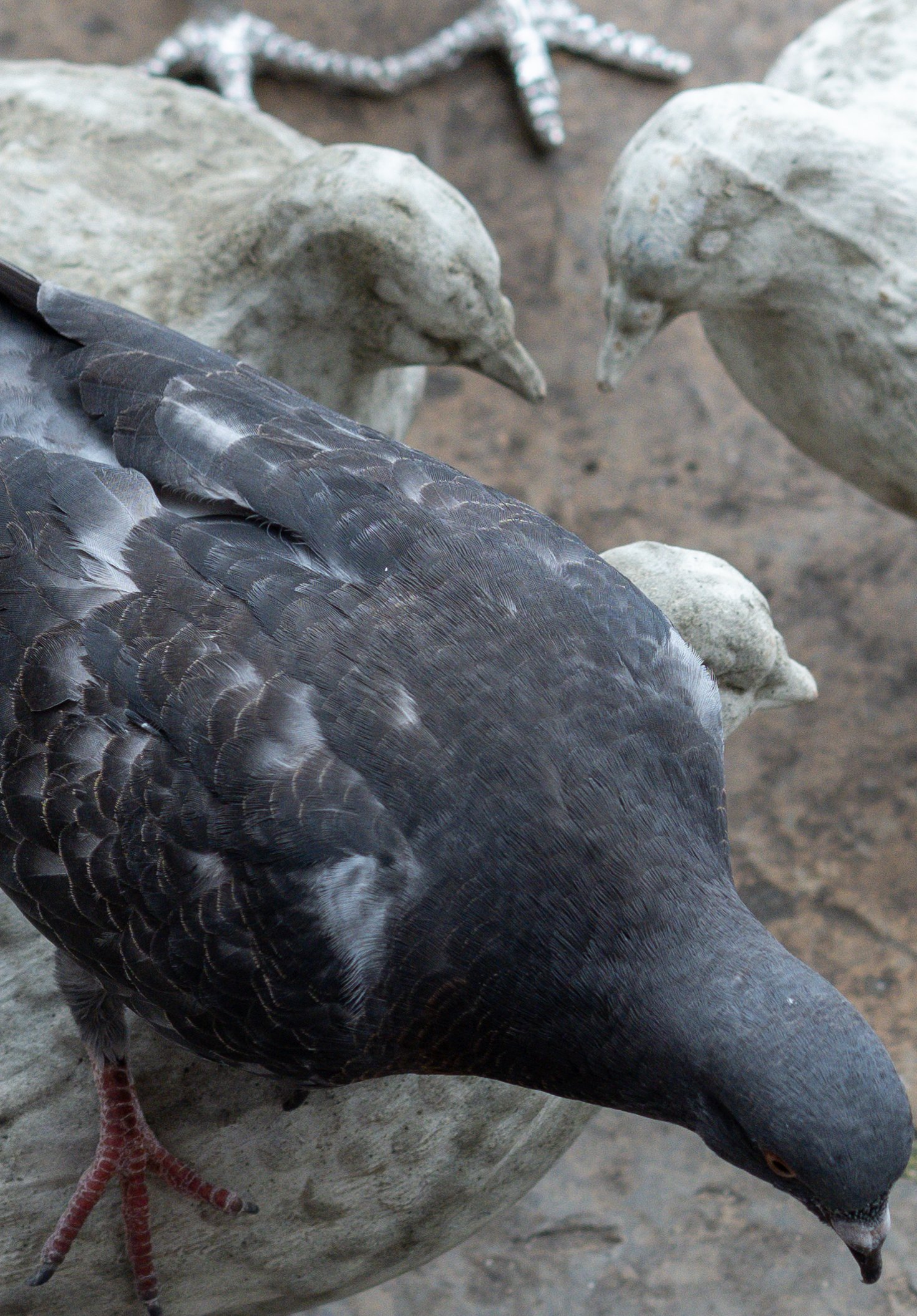
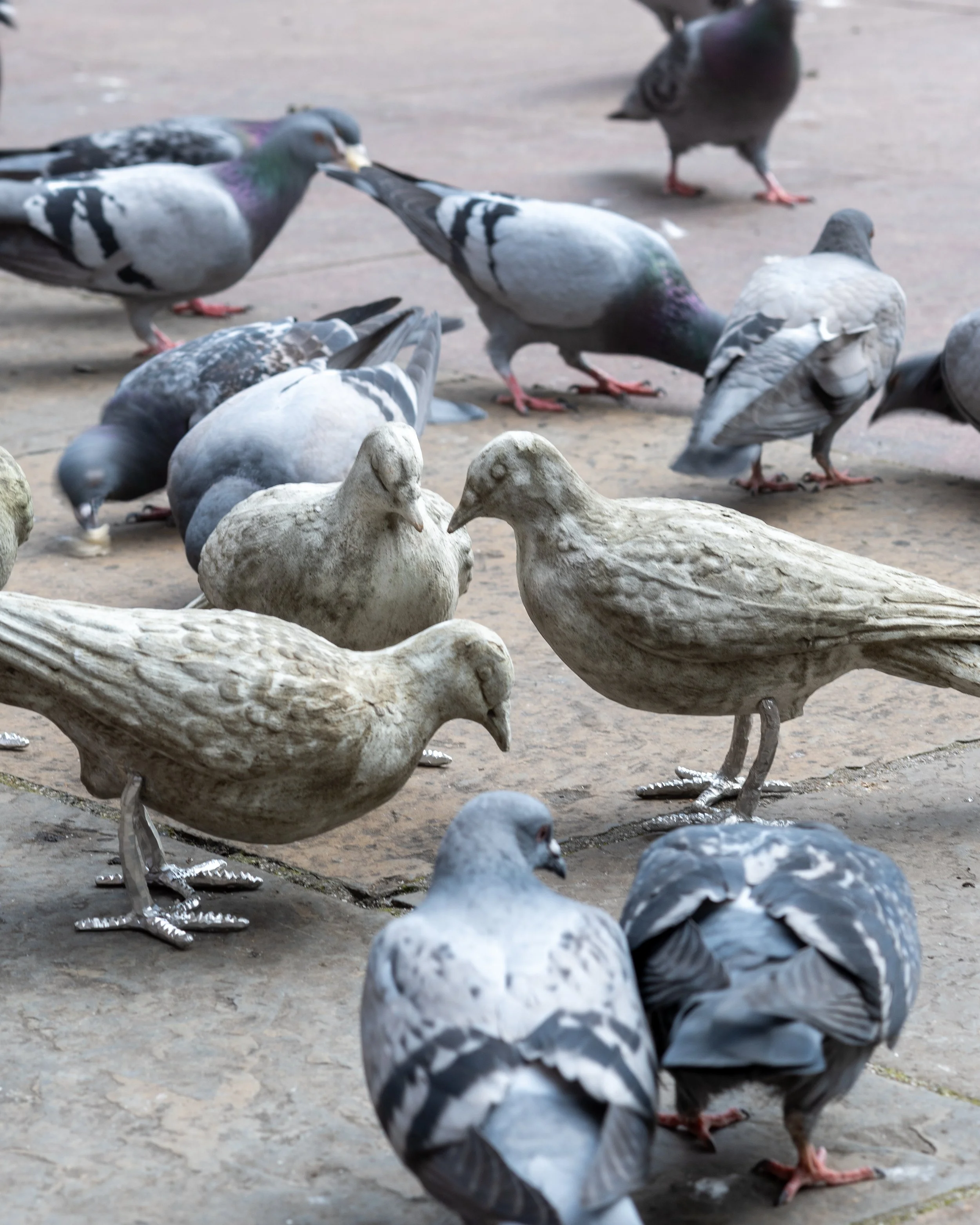
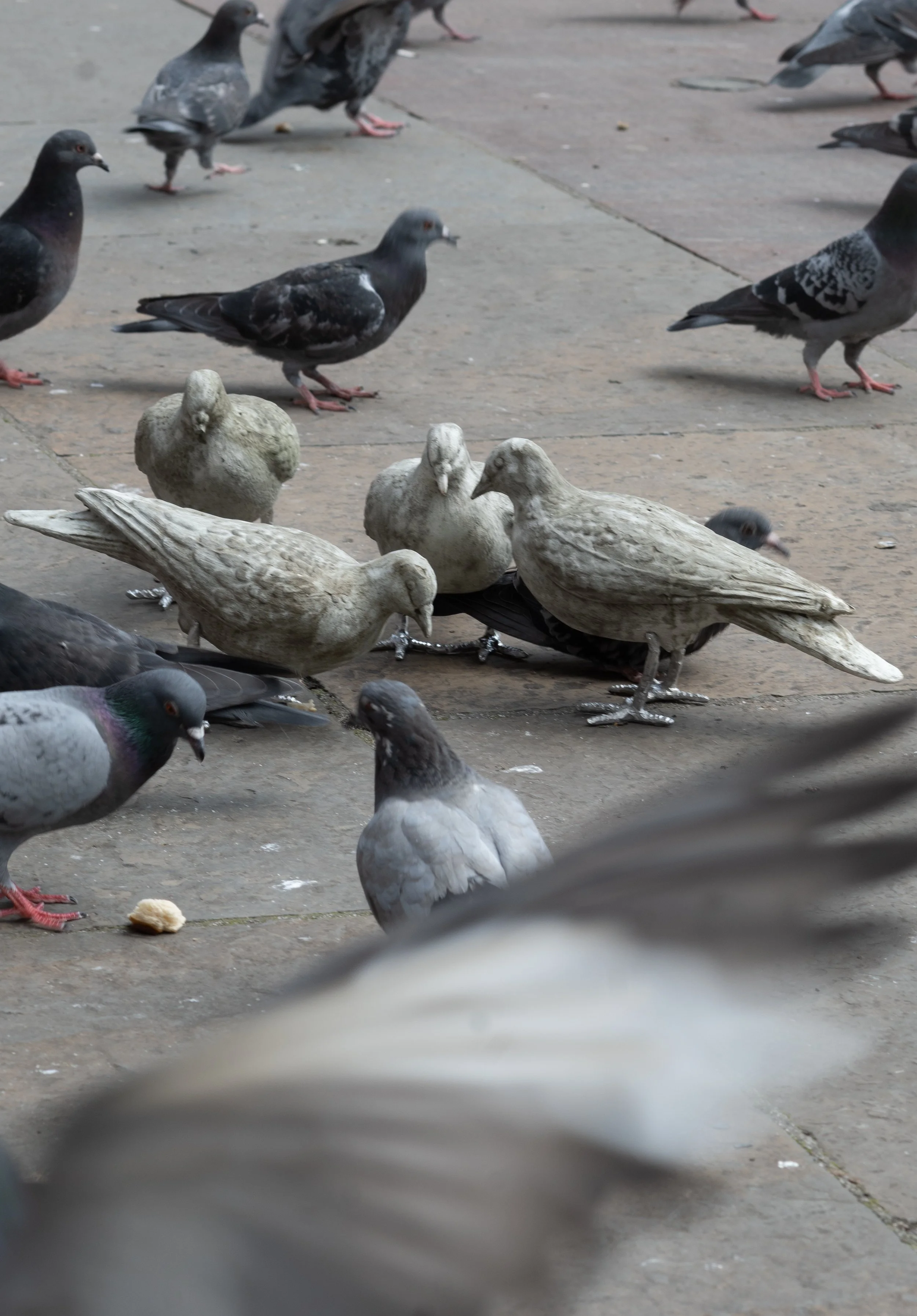
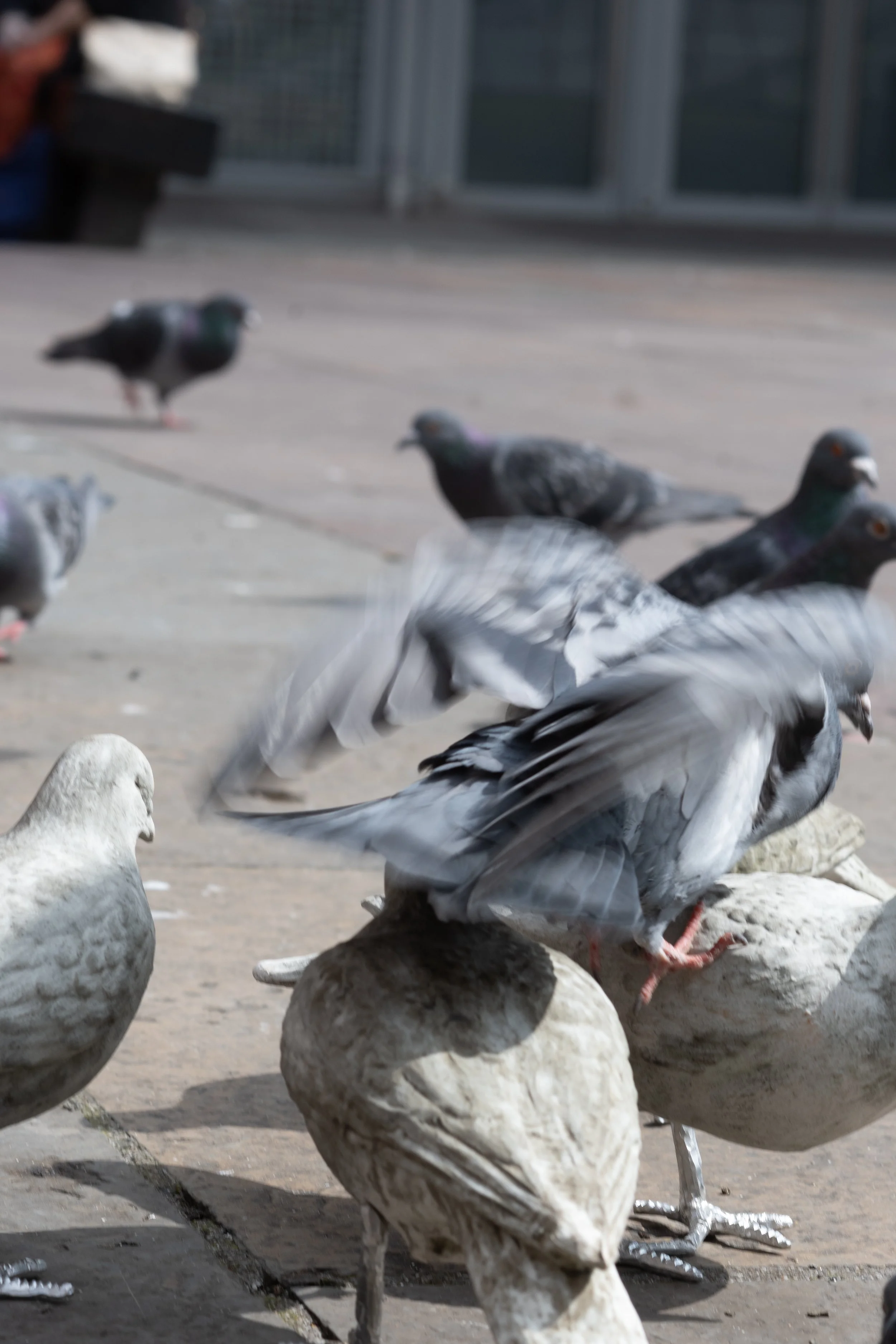
The sculptures are made using casts of decoy pigeons. They are therefore copies of an imitation a fake pigeon copied to make another fake pigeon. This repetition is important to the work. The sculptures sit somewhere between the living animal and the object, raising questions about imitation, instinct and conditioning. They look convincing enough to resemble something alive, but their rigidness makes it clear that they are not.
The title Taub comes from the similarity between the German words Taube, meaning pigeon, and taub, meaning deaf. I first came across the connection through a conversation and became fascinated by the idea that the words could become confused. The pigeon therefore became linked to the idea of not listening of following the flock, avoiding problems or becoming so accustomed to something that you no longer question it.
There is also something quite funny and uncomfortable about comparing ourselves to pigeons. They eat what is available to them and return to the same places, just as we can become creatures of habit. I have often thought about my own periods of overconsumption, whether that was food, social media or simply becoming obsessed with one particular thing. The pigeon is an exaggerated version of this behaviour, but not necessarily a completely unfamiliar one.
When Taub is shown in public spaces, the sculptures are placed amongst real pigeons. The birds sometimes approach them, unsure of whether they are living animals or objects. I enjoy this moment of uncertainty because the sculptures can almost disappear into their surroundings. They become part of the flock while remaining completely still.
I have given the pigeons shiny legs as a small gesture of respect. Despite being overlooked and often disliked, they have adapted incredibly well to the world we have made. For me, that resilience is important. Taub isn't simply about pigeons representing human behaviour; it is also about recognising something valuable in a creature we have decided is disposable.
“Pigeons reflect their environment. They adapt to the world they are given.”