VICE
VICE was a performance and series of public happenings made around Glasgow between 2022 and 2023. The work began with a fairly stupid question about pigeons and food, but developed into a much bigger investigation into consumption, habit and the things that gradually become part of us.
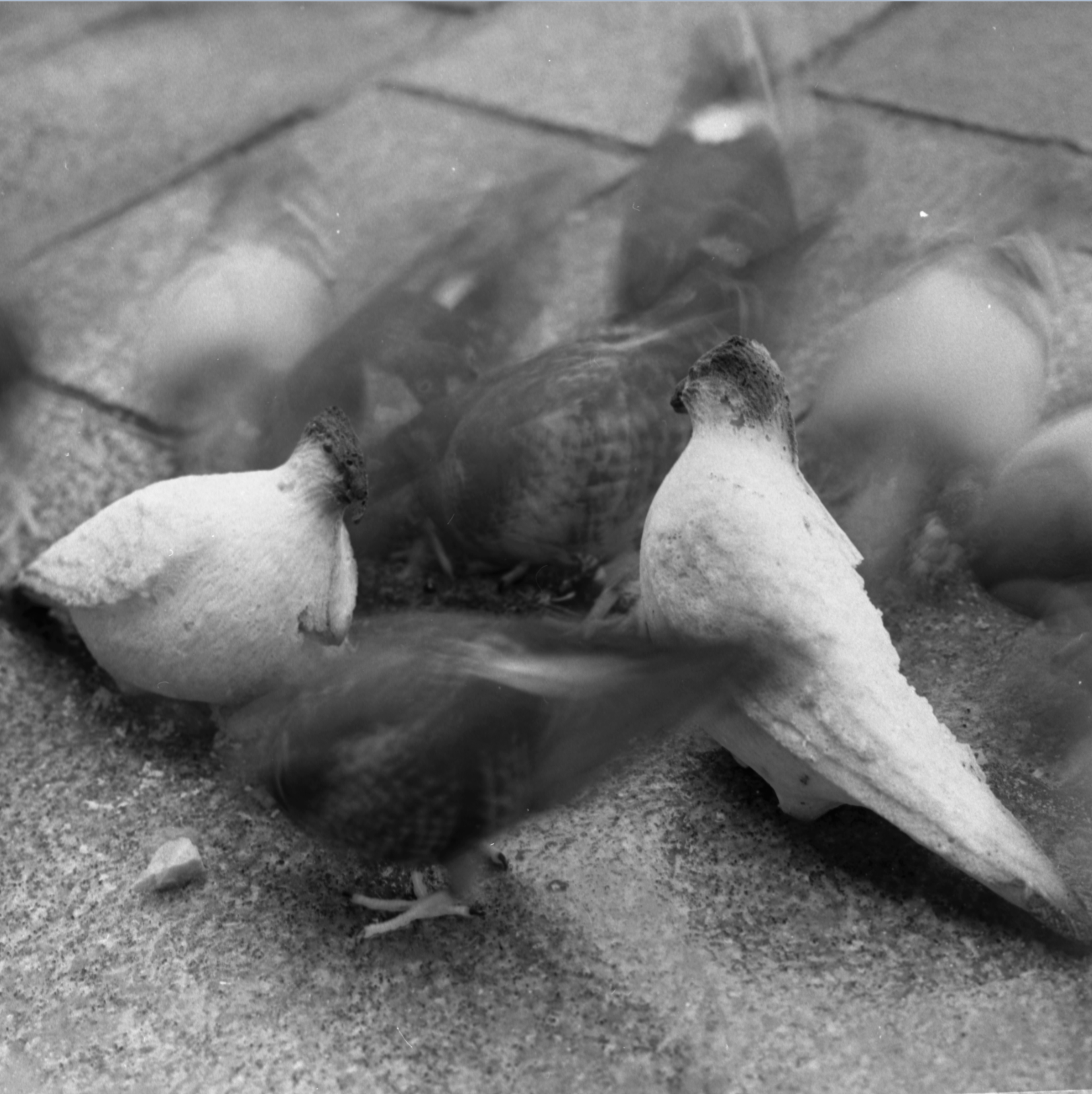
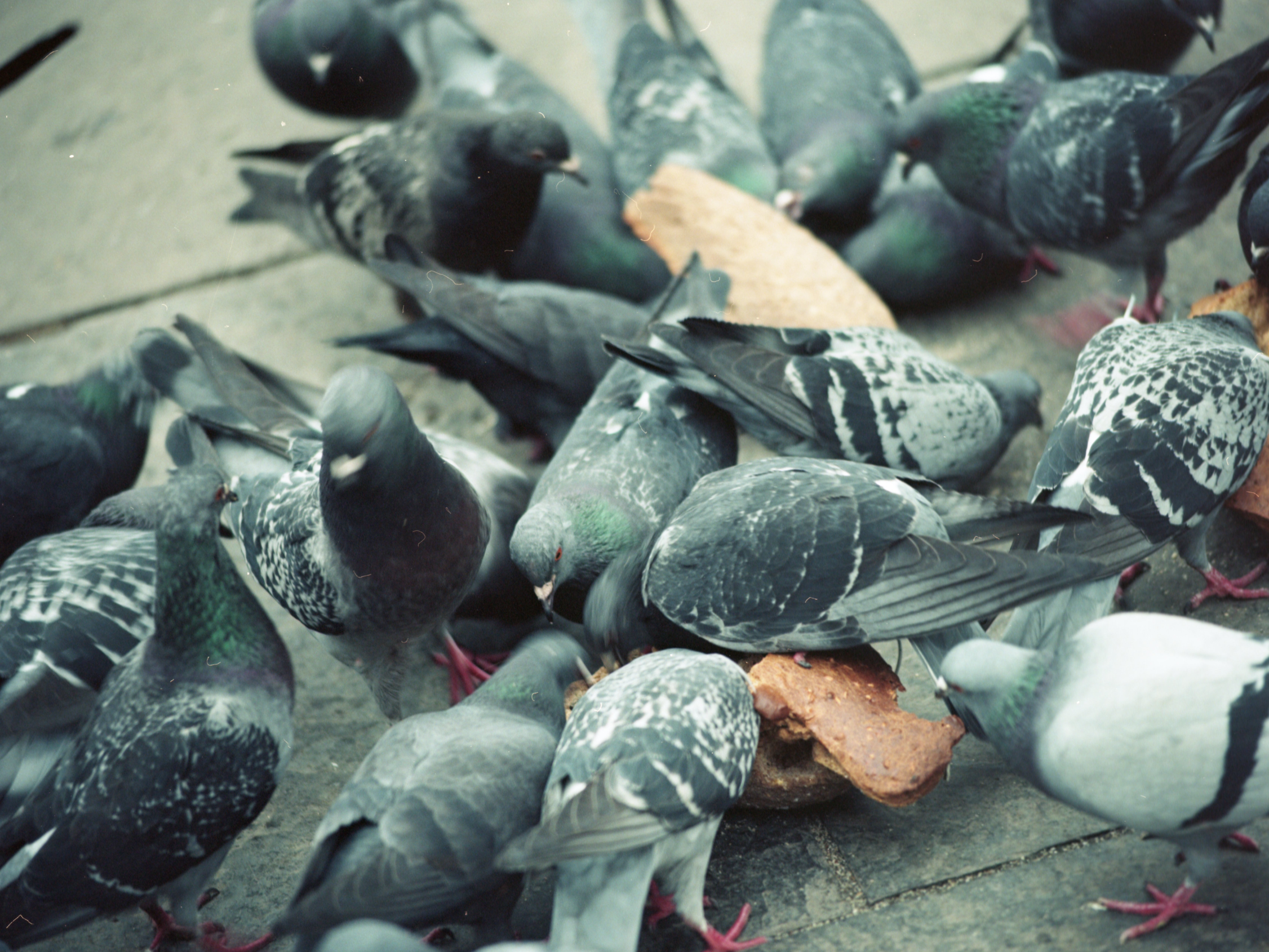
I made moulds from a decoy pigeon and used them to bake life-size pigeons out of pigeon-safe bread. I then took these bread pigeons into public spaces and placed them amongst real flocks. The performances were deliberately simple. I would arrange the bread birds on the ground and wait. At first the pigeons were cautious. They would circle them, move closer, and occasionally peck at them before backing away. Then one would commit. Another would follow, and quite suddenly the whole flock would descend. Within minutes, the bread pigeons were being pulled apart and eaten.
There was something quite strange about watching this happen. For a moment, the pigeons seemed to recognise something familiar in the bread versions of themselves. Then their instinct to eat took over. The distinction between the real pigeon and the bread pigeon gradually disappeared as the flock consumed them. Eventually there was nothing left but crumbs. I was interested in this as a very simple image of consumption: something resembling yourself placed in front of you, and the instinct to consume it overriding the recognition that it is familiar.
The work came partly from my own relationship with food at the time. I had become obsessed with Kraft Macaroni Cheese and, for a period, was eating it constantly. It was convenient and comforting, but I began to realise how easily a habit can become a kind of identity. I started thinking about the things we consume and how they can shape us. Food is the obvious example, but the same thing happens with media, advertising, politics, entertainment and the people we surround ourselves with. We take things in, process them and eventually they become part of how we think and behave.
The pigeon became a useful way of thinking about this because of its relationship with the city. Pigeons live from what we leave behind. They are incredibly good at adapting to human environments and have become almost inseparable from urban life. They eat our waste and exist within the excess we create, while we simultaneously treat them as a nuisance. I started to see them as a kind of reflection of ourselves: creatures shaped by their surroundings, following routines and responding to whatever is available.
VICE, St Enoch's Sqaure, Glasgow, 2022. Shortened clip of full performance. The public setting was important to the work. I chose places such as Buchanan Street and St Enoch Square because they are spaces built around movement, shopping and consumption. People pass through them constantly, buying things, looking at things, eating, working and moving on. I wanted the performances to exist within that rhythm rather than inside a gallery. The bread pigeons were absurd enough to attract attention, but they were also easy to overlook. From a distance, someone might simply see a flock of pigeons feeding. The work could exist as an ordinary urban event before becoming something stranger.
I was also thinking a lot about the way our behaviour is shaped online. The idea of the digital filter bubble was particularly important to me. We are constantly being given more of the things we have already shown an interest in. One video becomes another, one opinion becomes ten more versions of the same opinion. Eventually it becomes difficult to know whether we are choosing what we consume or simply responding to what is placed in front of us.
This was where the pigeon and the macaroni man began to overlap. Both are creatures caught in a cycle. The pigeon sees food and eats. I see the red box of macaroni and eat. The algorithm shows me something I have already liked, so I watch another version of it. None of these actions are particularly dramatic on their own. It is the repetition that interests me. At what point does a choice become a habit, and at what point does a habit start making the choices for you?
The title VICE came from this idea of the things we repeatedly return to, even when we know they aren't necessarily good for us. I wasn't interested in presenting myself as being outside of these behaviours. Quite the opposite. The work started from recognising them in myself. The macaroni cheese was funny, but it was also a genuine example of how easily I could fall into a very narrow cycle of consumption. The pigeons gave me a way of looking at that behaviour from the outside.
I was influenced by artists who use simple actions and everyday situations to create something more complicated. Roman Signer's work was particularly important to me. I was drawn to his interest in forces, transformation and the idea of setting something in motion and then allowing the outcome to happen. I liked the fact that his works could be incredibly simple in their construction but still produce a sense of anticipation and uncertainty. VICE worked in a similar way. I made the objects, placed them in position and then stepped back. The pigeons completed the work themselves.
That relationship with the pigeons also made me think about authorship and participation. I have always felt slightly uncomfortable with calling the pigeons performers. They weren't trained or instructed; they were simply doing what pigeons do. I created a situation and they responded to it. In that sense, the work sits somewhere between sculpture, performance and an experiment. The outcome wasn't completely mine to control, which was part of what made the performances so interesting.
Looking back, VICE was an important project for me because it opened up a lot of ideas that I have continued to return to. The pigeons reappeared in later work, particularly Taub and A Stale Conversation Between Two Brothers, where they became less about the act of consumption itself and more about instinct, conditioning, urban life and our tendency to follow patterns. The ideas around waste, excess, repetition and the relationship between humans and the environments we create have also continued into my material-based work.
What I like most about VICE now is that it started with something quite simple and slightly ridiculous. I didn't set out to make a definitive statement about social media or consumerism. I wanted to see what would happen if I put a bread pigeon in front of a real pigeon. The rest came from watching what happened, thinking about why it happened, and gradually recognising parts of myself in it. It became a starting point for a much wider interest in how we consume, how we adapt and how the things around us quietly become part of who we are.